
Why a Table Top Magnifier Still Matters for Precision Inspection in US Manufacturing Labs
The pace of manufacturing in the USA has become so demanding that accuracy isn’t just expected—it’s required. Whether a lab is checking circuit boards, medical devices aerospace fasteners or small engineered parts even a barely visible defect can create real problems later. A small scratch, a misaligned feature, or a tiny surface flaw can lead to performance issues or even full product recalls. Because of these stakes inspection teams depend on tools that help them see what the naked eye often can’t. One simple but incredibly reliable tool that many USA labs still trust is the table top magnifier.
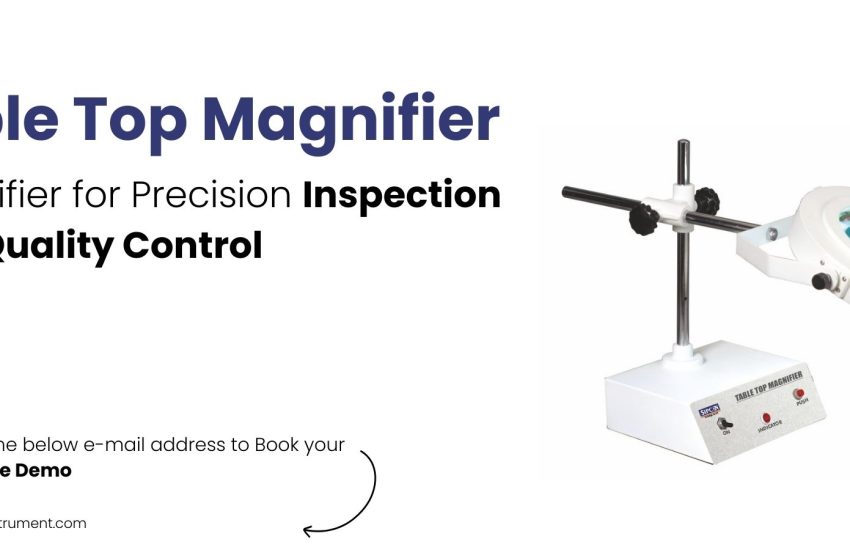
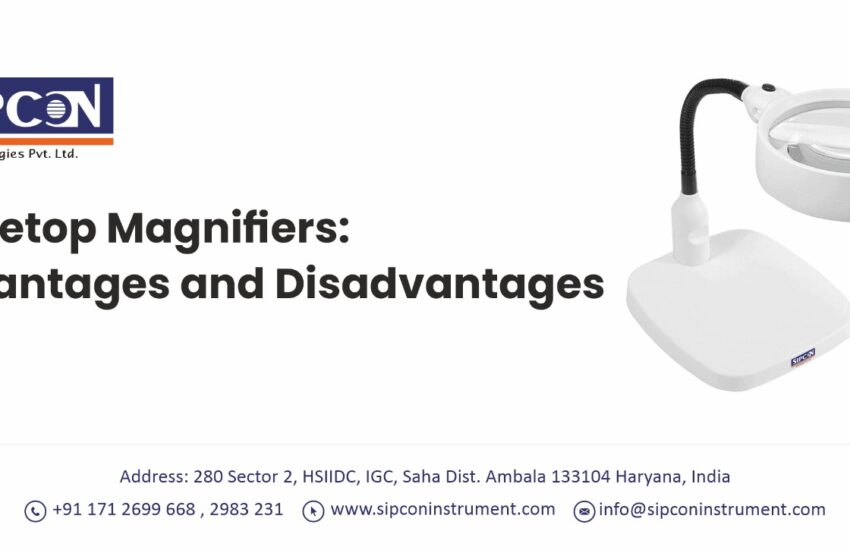
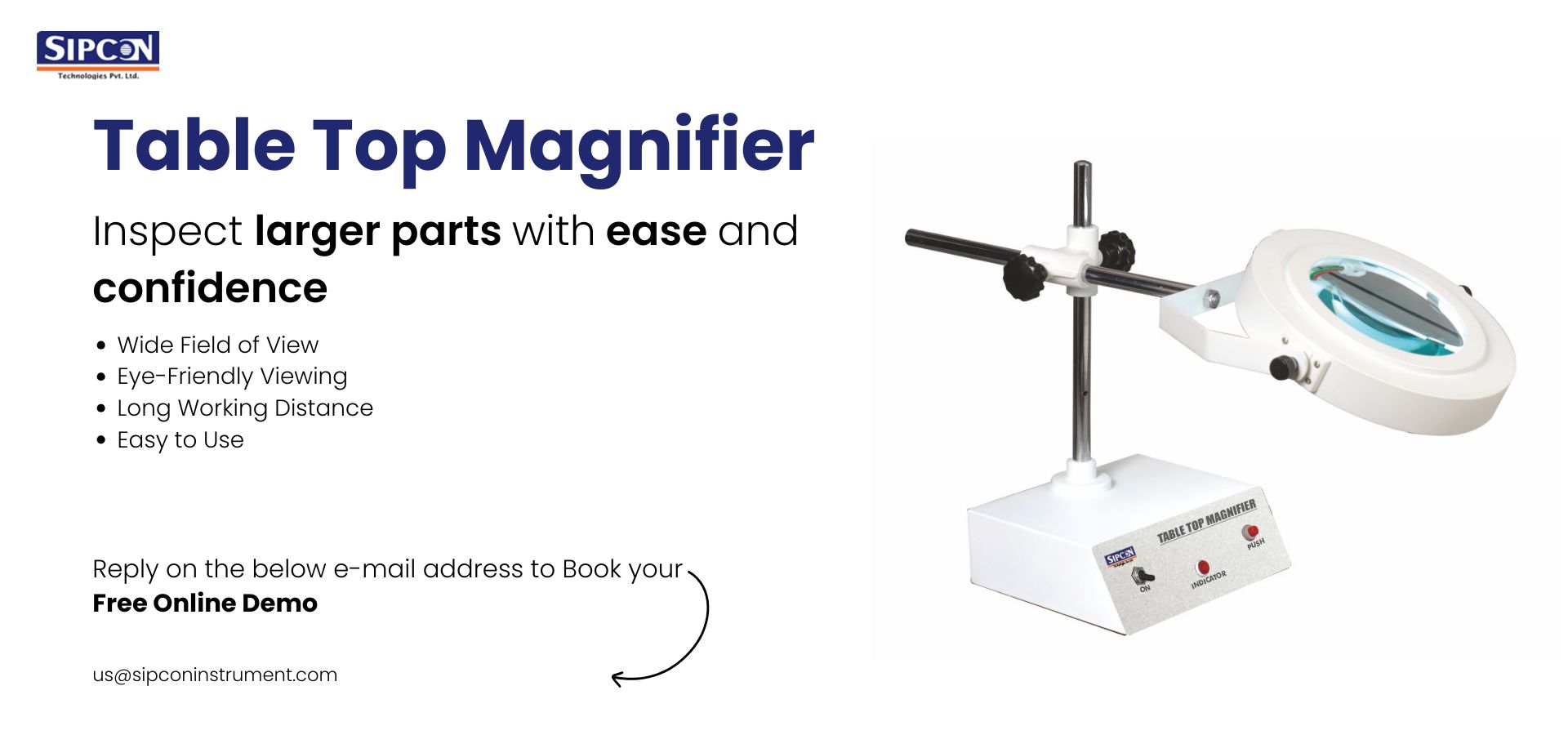
Unlike handheld magnifiers or traditional microscopes, a table top magnifier offers stable magnification a wide viewing field, and operator comfort making it ideal for long inspection cycles. This blog breaks down why USA industries depend on them and how they help maintain high-quality production standards.
1. The Growing Need for Precision Inspection in US Manufacturing
Over the past decade USA industries have shifted toward tighter tolerances, miniaturized components and complex assemblies. This has been driven by:
- The rise of IoT and micro-electronics.
- Strict FDA and ISO compliance for medical and industrial parts.
- Global competition requiring near zero-defect manufacturing.
- Increased automation and need for human verified inspection.
- Demand for high-reliability components in aerospace and automotive.
Because of this, visual inspection has become more challenging. Small defects like burrs, micro-scratches, soldering issues or dimensional inconsistencies cannot be detected by the naked eye alone. This is where a table top magnifier fills the gap by offering distortion free magnification and an ergonomic working setup.
2. What Makes Table Top Magnifiers Different from a Microscope?
Many lab engineers assume a microscope is the only tool for precision inspection. However in many practical cases, a magnifier performs better.
Key Differences:
| Feature | Table Top Magnifier | Microscope |
| Field of View | Large, easy to scan larger objects | Limited |
| Eye Comfort | High, strain-free | Can cause fatigue |
| Working Distance | Long, ideal for handling parts under lens | Short |
| Ease of Use | Quick, user-friendly | Requires adjustments |
| Ideal Applications | General inspection, QC, assembly | Micro-level research work |
The magnifier sits right between unaided vision and microscopy—giving users the best of both worlds.
3. Why US Labs Prefer Table Top Magnifiers: Key Advantages
✔ 1. Better Defect Detection
The biggest reason labs use a magnifier is to find defects not visible with the naked eye:
- Cracks
- Surface dents
- Soldering bridges
- Foreign contaminants
- Missing features
- Dimensional inconsistencies
The magnifier’s up to 7X magnification is ideal for industrial inspection—strong enough to enhance visibility while allowing the operator to view the entire part at once.
✔ 2. No Eye Strain, Even During Long Working Hours
Modern magnifiers eliminate spherical aberrations, meaning the image remains sharp, distortion-free, and comfortable to view. In US labs where inspectors spend 6–8 hours daily examining components, this makes a tremendous difference in productivity and accuracy.
✔ 3. True Color Viewing for Accurate Judgments
Many low-quality lenses add a green or grey tint, which affects judgment of:
- Surface finish
- Material clarity
- Crack visibility
- PCB soldering quality
A reliable true-color magnifier ensures the part is viewed exactly as it is—critical for precision-based industries.
✔ 4. Uniform, Flicker-Free Illumination
Inspection is not only about magnification—it’s also about lighting.
A good table top magnifier uses a circular, flicker-free fluorescent or LED light that ensures:
- No shadows
- Uniform brightness
- No strain on the eyes
- Better clarity on reflective or metallic surfaces
This lighting setup significantly reduces operator fatigue and enhances defect detection accuracy.
✔ 5. Long Working Distance for Comfortable Handling
The large lens diameter and long working distance allow operators to:
- Hold tools under the lens
- Rotate or adjust parts easily
- Perform rework or assembly
- Use both hands freely
This is essential in fields like electronics repair, jewelry work or assembly of precision components.
✔ 6. Flexible Adjustment: Tilt, Rotate & Move Effortlessly
Most US labs prefer magnifiers that offer:
- 360° rotation
- 90° lens tilt
- Adjustable vertical and horizontal movement
This flexibility allows the operator to position the lens exactly where needed without disturbing the part being inspected.
✔ 7. Suitable for Almost Any Industry
A high-quality table top magnifier is used across multiple US industries:
- Electronics & PCB Assembly
- Jewelry Manufacturing
- Aerospace & Defense
- Medical Device Production
- Fasteners & Hardware
- Automotive Parts
- Engineering Components Inspection
From identifying micro-cracks to verifying machining quality, it is one of the most versatile tools in a lab environment.
4. Applications of Table Top Magnifiers in the USA
✔ Electronics & PCB Inspection
Used to detect soldering defects, component misalignment and micro-short circuits.
✔ Medical Device Inspection
Critical for checking edges, cleanliness, surface finish, and assembly integrity.
✔ Jewelry & Gemstone Examination
Helps identify inclusions, polish quality, stone alignment, and craftsmanship flaws.
✔ Engineering & CNC Machining
Ideal for checking machined edges, burrs, surface defects, and small features.
✔ Fastener Quality Control
Essential for detecting thread issues, dimensional errors, and coating defects.
5. Why a Table Top Magnifier Improves Productivity in US Labs
Productivity is not just about spotting defects; it’s also about doing it consistently and comfortably.
A good magnifier helps by:
- Reducing the time required to inspect each part
- Allowing operators to work longer without fatigue
- Giving a larger field of view to inspect bigger components
- Improving defect detection rate
- Supporting rework and minor adjustments under the lens
Overall, US labs rely on magnifiers to achieve low rejection rates and higher throughput.
6. Choosing the Right Table Top Magnifier
When US labs look for magnifiers, they typically consider:
- Lens diameter
- Magnification level (3.5X or 7X)
- Lighting type and quality
- Stand type (table top vs. C-clamp)
- Build quality and stability
- Movement flexibility (vertical + horizontal)
- True-color accuracy
- Ergonomics
These factors directly impact the inspection accuracy and operator experience.
7. Conclusion: A Must-Have Tool for US Precision Labs
A table top magnifier is no longer just an optional tool—it’s a necessity for modern US manufacturing labs that aim for high-quality, defect-free production. With its balance of comfort magnification lighting and versatility, it remains one of the most efficient and cost-effective inspection tools in the industry.
Whether the requirement is electronics jewelry, medical devices or engineering parts, the right magnifier dramatically improves inspection accuracy and overall productivity.
FAQs (
1. What magnification level is best for industrial inspection?
Most US labs prefer 3.5X to 7X magnification because it offers clarity without losing the overall view of the part.
2. Are table top magnifiers better than handheld magnifiers?
Yes. Handheld magnifiers cause hand fatigue and unstable viewing. Table top magnifiers provide stable, distortion-free inspection.
3. Can these magnifiers be used for soldering or assembly work?
Absolutely. Thanks to the long working distance and large lens area, they are ideal for PCB rework and small component assembly.
4. Do magnifiers with lights reduce eye strain?
Yes. Uniform, flicker-free illumination helps reduce eye fatigue during long inspection hours.
5. Is a 7X magnifier good for jewelry and gemstone inspection?
Yes. 7X magnification provides enough clarity to inspect inclusions, polish quality, and fine detailing.
Boost Your Lab’s Accuracy and Comfort Today!
Discover top-quality table top magnifiers trusted by USA manufacturing labs for crystal-clear, distortion-free inspection. Boost accuracy, reduce eye strain, and ensure flawless quality control across electronics, medical devices, jewelry, and engineering components.
🌐 Explore Now: https://www.sipconinstrument.com/us
📲 Call Us: +1 2623914785
✉️ Email: export@sipconinstrument.com
📍 Visit: 260 North Beaumont Ave, Brookfield, Wisconsin 53005, USA