
Measurement and Inspection: Definition, Types, Unit & Uses
The terms measurement and inspection in many factories and testing labs are used as if they mean the same thing. They may sound the same, but they are quite different. Measurement gives you numbers. Inspection helps you decide whether something is good to go or needs to be processed again. Here is a real-world example:
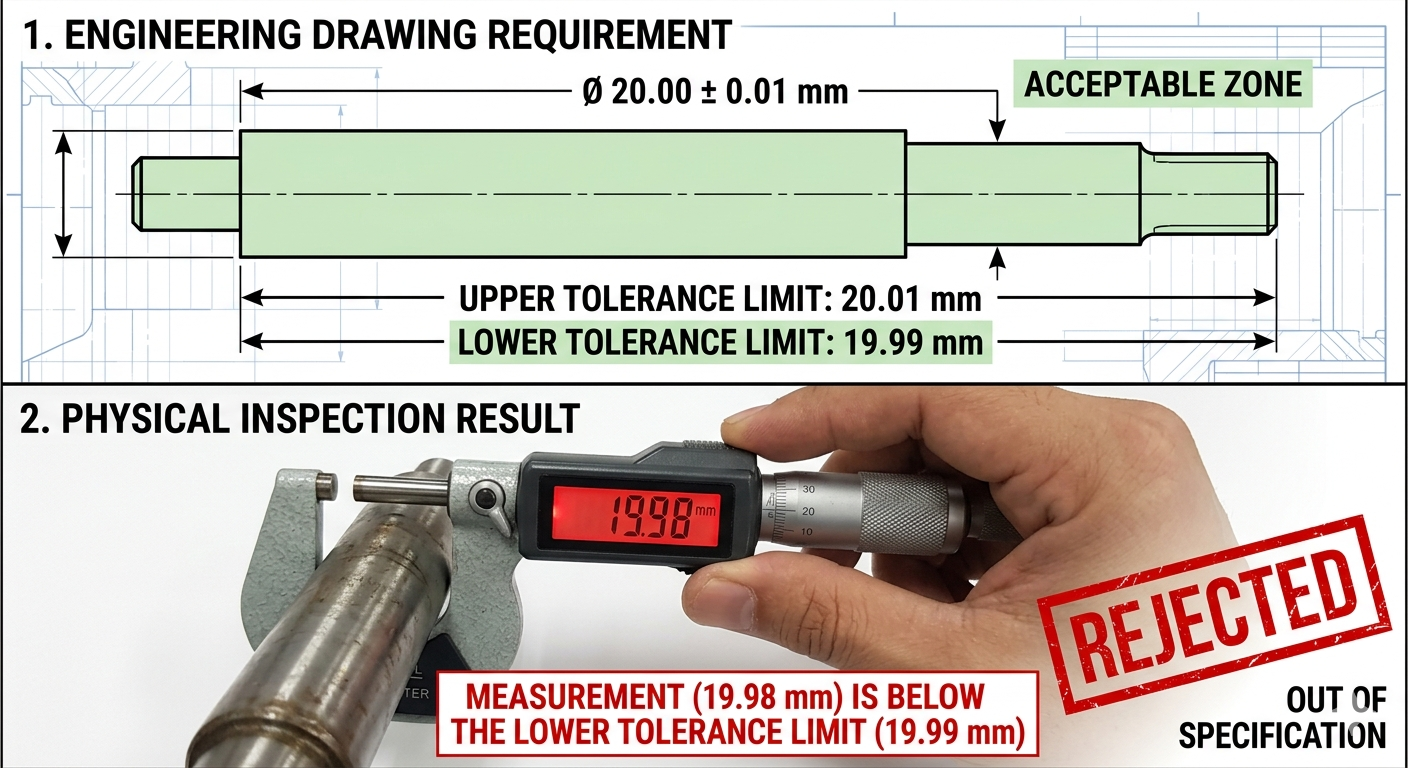
A shaft is measured.
You get the diameter as 19.98 mm.
The drawing requirement is 20.00 plus-minus 0.01 mm
Inspection happens based on the benchmark set by the drawing requirement. The inspection rejects the shaft because currently it is 19.98 mm and the allowed size is 19.99 mm.
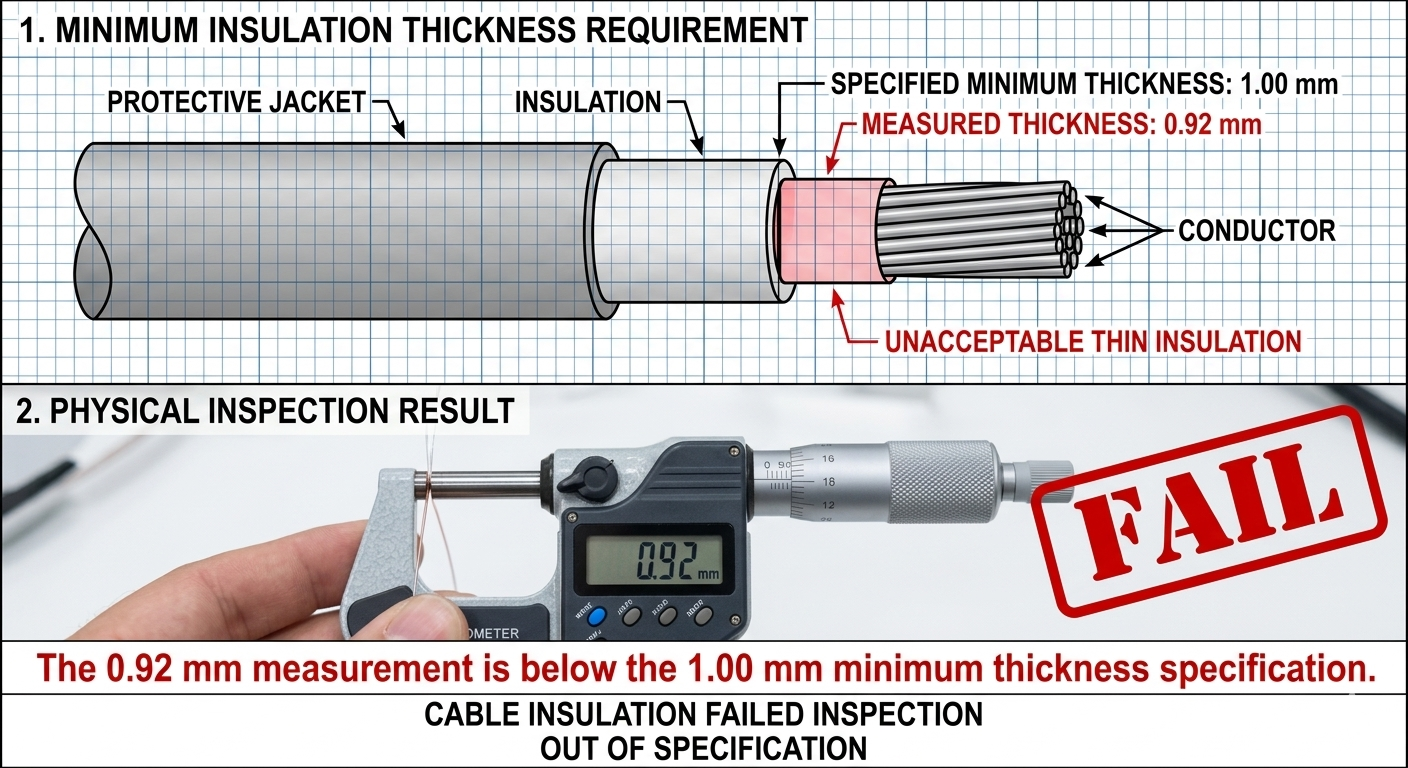
Here is another example:
You measure insulation thickness at one point as 0.92 mm.
Specified minimum thickness is 1.00 mm.
You have accurately measured the insulation thickness, but the cable fails inspection because the minimum thickness is not 1.00 mm.
What is Measurement in Metrology?
Measurement in metrology is the process of assigning a numerical value to a physical quantity by comparing it with a predetermined number. You don’t use guesswork in measurement. You do not just look at the finished product and deliver a visual judgment.
Measurement happens in units.
- You measure length in meters
- You measure mass in kilograms
- You measure load in Kelvin or with a calibrated load cell
Metrology is the science behind all these processes. It ensures that measurements are traceable, repeatable, and reliable.
As you have read above, in measurement, the value obtained is always compared to a predetermined number. When a micrometer shows 19.98 mm, that number is not random. It is based on a calibrated instrument that has been compared to a reference standard. That comparison is called traceability.
Here is a thing to remember: due to uncertainty, no measurement is perfectly exact. Every measurement carries a small scope of error. So, the goal in metrology is not to eliminate error completely, because that is impossible, but it is to control it within acceptable limits.
Therefore, measurement tells you how much. It does not tell you whether some measurement is good or not, it simply tells us the value, as accurately as your system allows. It is like telling someone the truth whether the truth is offensive or pleasing.
What is Inspection in Metrology?
Inspection in metrology means comparing the measured values with benchmark values to decide whether a product has the right size or not. Inspection is related to decision making.
So, while measurement gives you a number, inspection analyses and interprets the number.
Going back to the previous example if the measured diameter is 19.98 mm and the specified tolerance is 20.0 plus-minus 0.01 mm, The inspection will reject it because the lower limit is 19.99 mm.
Since every evaluation, whether it is inspection or measurement, depends on a reference, inspection relies on
- An engineering drawing
- A product standard
- A customer specification
- A regulatory requirement
Without a reference, an inspection has no meaning, because by itself, a number is neutral. It becomes good or bad only when compared against a reference.
Inspection can take many forms. It may be visual, such as checking for surface defects. It may be dimensional, such as verifying thickness or diameter. It may even be destructive, such as tensile testing, where the sample is pulled until it breaks.
Difference between Measurement and Inspection
What’s the biggest difference between measurement and inspection? Measurement is a technical activity; inspection is a decision activity. Measurement answers how much; inspection answers: is it acceptable?
Measurement produces data. It may say the insulation thickness is 0.97 mm. It may say the tensile strength is 425 MPa. These are numerical results. They are neutral.
Inspection takes these numbers and compares them to preset references. For example, if the minimum allowed insulation thickness should be 1.00 mm, then 0.97 mm is not going to do its job. If the required tensile strength is at least 400 MPa, then 425 MPa is going to be fine.
Here is a tabular representation of the differences between measurement and inspection.
| Aspect | Measurement | Inspection |
| Purpose | To determine the value of a quantity | To decide conformity |
| Output | Numerical result | Pass or fail decision |
| Question answered | How much? | Is it acceptable? |
| Based on | Instruments and standards | Specifications and requirements |
| Nature | Quantitative | Evaluative |
One thing you need to remember is that while measurement can be accurate, inspection can still reject the part. There may be nothing wrong with the instrument but it’s just that the product does not meet the requirement.
Understanding the difference between measurement and inspection is the foundation of effective quality control and dependable production.
Units Used in Measurement
In metrology, all the numbers are considered in terms of units. You cannot simply say that the thickness is 1.2. 1.2 what? It can be millimeters, microns, or inches, or another unit.
Unit defines the scale of measurement. In most industrial applications, the International System of Units is used. Length is used in meters or millimeters. Force is measured in newtons. Mass is measured in kilograms. Temperature is measured in degrees Celsius or Kelvin. In precision engineering, even microns matter. A difference of 0.05 mm can decide whether a part passes inspection or gets rejected.
The Importance of Measurement and Inspection
Both measurement and inspection directly affect safety, reliability, and cost of your products. The success of your process control depends on measurement. Inspection guarantees quality.
Without measurement, you cannot decide how long a piece of equipment is or what is the insulation thickness of the cable you are manufacturing. Without inspection, you cannot decide quality, you cannot decide whether your order is going to be accepted or rejected.
In manufacturing, many products fail to comply not because they are not measured correctly but because the reference points are ignored. This is why it’s very important to understand what measurement and inspection are and what are their core differences. When both are understood, your quality is assured rather than depending on chance.