
Industrial Table Top Magnifier Manufacturer and Supplier in the USA
Introduction / Overview
Factory inspection often means just noticing little problems before they become rejects, reworks, or consumer complaints,” states Quality Digest. “A workbench-mounted magnifier makes it easier to examine parts with a clearer and steadier view than a hand-held lens.
What is a Table Top Magnifier?
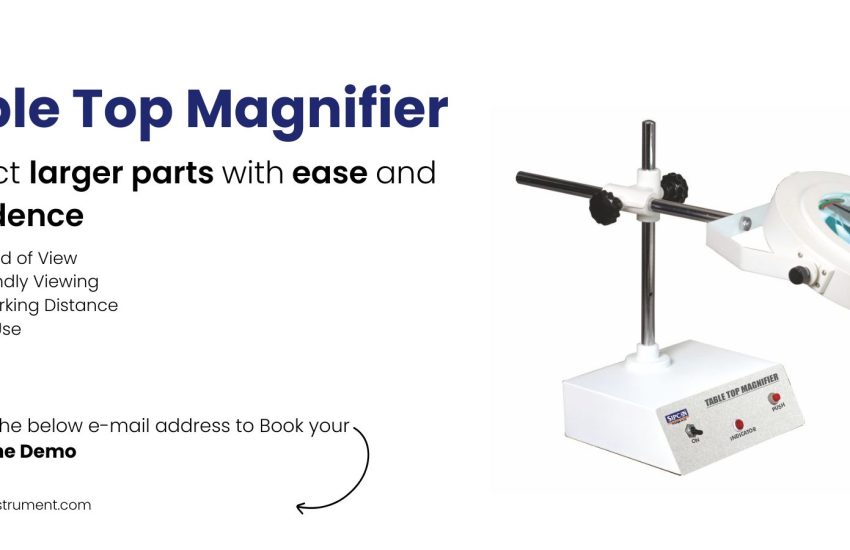
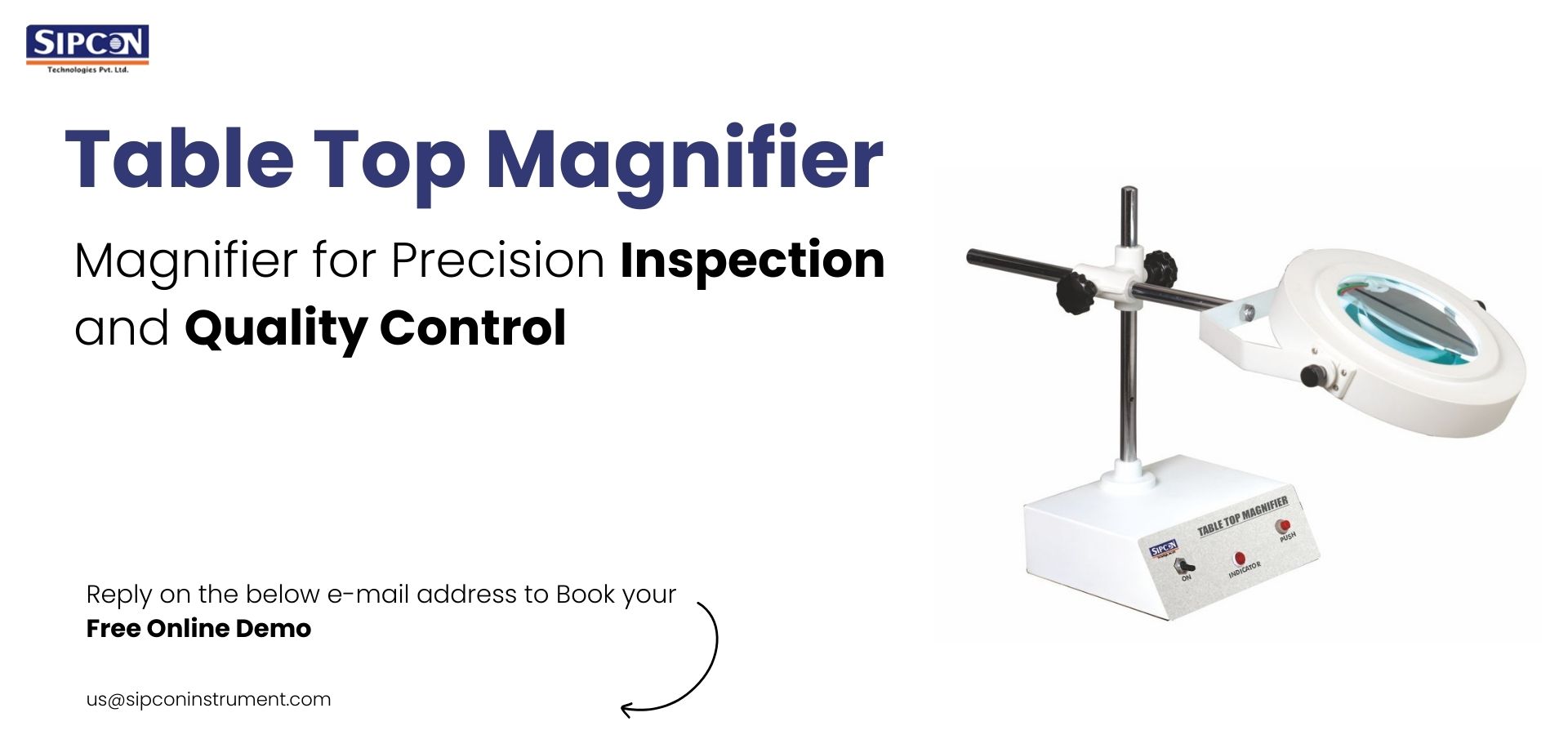
A table-top magnifier is a lensing system mounted on a bench for enlarging minute objects being inspected or assembled. The lens is maintained in a fixture or base so that while the object is being shifted below, there is no variability in the viewing-area location. In many plants, it becomes a daily-use tool for checking finishes, edges, markings, and alignment.
In simple terms, a tabletop magnifying glass works like a “fixed zoom lens” for the human eye. It helps the operator see fine details without holding the lens in the air. This is why many buyers search for terms like table top magnifier, magnifier table top, or even magnifying glass table top when setting up quality stations.
Importance of Lighted Magnifiers for Industrial Inspection
Lighting changes how defects appear. Under normal room light, shallow scratches, solder cracks, and tiny pits can blend into the surface. A table-top magnifying glass with light adds focused illumination at the exact viewing point, which makes small issues easier to confirm.
A table-top lighted magnifying glass also reduces guesswork across shifts. When the light source is built into the unit, inspection conditions stay consistent even if the surrounding work area lighting changes. This consistency matters for quality control and for training new operators on what “acceptable” looks like.
Product Features & Functionality
A good inspection magnifier should feel stable, give clear optics and be comfortable to use for long sessions. It should also match the size of the parts being checked – PCB components, rubber seals, molded plastic pieces, or small machined items.
Key Features of the Table Top Magnifying Glass with Light
- Magnification up to 7X for precise inspection
Magnification up to 7X is a practical range for many industrial checks. It helps operators confirm small defects without shrinking the field of view too much. This level is often used for identifying fine burrs, small surface cracks, printing defects, solder issues, and tiny dimensional irregularities that the naked eye can miss. For tasks requiring far more than 7X, teams typically move to stereo microscopes. But for day-to-day defect screening, 7X is commonly enough and faster to use at the bench.
- Strain-free vision with no spherical aberrations
Lens distortion is a quiet productivity killer. Cheaper optics can look sharp at the center but blur or warp toward the edges, which forces constant repositioning. Better designs control spherical aberrations so the image stays more natural across the viewing area. This matters because inspection is repetitive. Clear optics reduce eye strain and help operators maintain consistent decisions over long periods, especially during high-volume checking.
- Long working distance and true color vision
Working distance means the space between the lens and the part. A longer working distance makes it easier to hold parts, rotate them, and use small tools under the lens. True color vision also matters because discoloration can signal overheating, contamination, coating issues, or material variation. In electronics and molded parts, color differences can be subtle. Lighting and optics that preserve real color help prevent wrong calls during acceptance checks.
Types of Table Top Magnifiers Available
Different inspection setups need different stands and movement. Some teams want a fixed, always-ready station. Others need flexibility because parts vary in shape and height.
1. Fixed-stand Table Top Magnifiers
A fixed stand is designed for stability and repeatability. It holds the lens at a set position and height range, which helps when the same product is inspected throughout the day. This type often suits dedicated QC stations and assembly lines. This category is commonly referred to as a magnifying glass table top solution because the lens stays in a predictable place and the part moves under it.
2. Flexible-arm Lighted Magnifiers
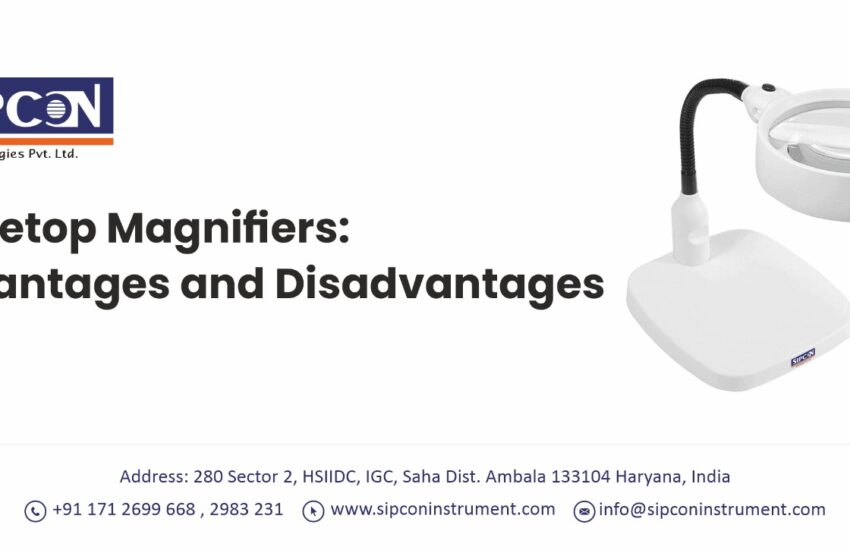
A flexible-arm unit lets the user pull the lens closer, move it sideways, or raise it for taller items. It works well when a workstation handles many part types, or when inspectors need to view different points without constantly repositioning the item. These are often described as a table top lighted magnifying glass option since the light and lens move together, keeping the viewing area bright even when repositioned.
|
Feature |
Fixed-Stand Model |
Flexible-Arm Model |
|
Best for |
Repetitive inspection of same part type |
Mixed parts and changing viewing positions |
|
Stability |
Very high |
High, depends on arm quality |
|
Speed in routine QC |
Faster once set up |
Fast for varied tasks |
|
Working area flexibility |
Limited |
Wide range of motion |
|
Typical users |
Assembly line QC, dedicated stations |
Repair benches, electronics, lab benches |
How Table Top Magnifiers Enhance Quality Control
Table top inspection tools improve both detection accuracy and day-to-day consistency. They also support training because new operators can learn what defects look like under a controlled setup.
Ease of defect identification
Enlarged viewing makes it simpler to identify issues such as:
- Hairline cracks on molded or cast items
- Burrs on machined edges
- Solder bridging and cold joints on electronics
- Surface contamination, scratches, or coating gaps
When paired with stable lighting, defects stand out faster, so fewer parts pass by mistake.
Reduced operator fatigue
Inspection can be tiring when workers squint or lean forward for hours. A table top magnifier with light supports a more natural posture because the lens brings the detail to the user rather than forcing the user to move closer to the part.
Suitable for electronics, rubber, and precision components
Many industries rely on tabletop magnification because the parts are small and tolerances are tight. Common use cases include:
- Electronics and PCB assembly
- Rubber gaskets, seals, and O-rings
- Medical device components
- Watch parts, springs, and micro-mechanical pieces
- Small plastic molded parts and connectors
In many catalogs and purchase lists, these products may appear as magnifier table top inspection stations for bench work.
|
Buying Point |
What It Means on the Bench |
What to Check Before Purchase |
|
Magnification up to |
Helps spot small defects without losing too much view |
Clear marking of value, real working distance at that power |
|
Lens clarity |
Reduces blur and false “defect” appearance |
Edge-to-edge clarity, low distortion, clean optics |
|
Built-in lighting |
Improves contrast and reduces shadows |
Even brightness, glare control, consistent color rendering |
|
Stand style |
Affects stability and ease of positioning |
Fixed vs flexible arm, lock strength, base stability |
| Ergonomics | Helps reduce neck and eye strain | Comfortable height range, easy positioning, smooth movement |
Why Choose a Trusted Manufacturer and Supplier
A table top magnifier supplier is not only selling a lens. They are supporting a process that affects reject rates, customer quality, and audit confidence. A trusted source helps a plant keep inspection stations running without frequent replacements and mismatched performance across units.
Advantages of Buying from a USA-based Table Top Magnifier Manufacturer
Many industrial teams prefer a USA-based table top magnifier manufacturer for practical reasons:
- Faster lead times and easier restocking for multi-station rollouts
- Clear warranty handling and simpler service communication
- Better access to replacement parts and accessories
- More predictable consistency between batches for standardization
For companies running multiple facilities, local supply can also make it easier to maintain the same inspection setup everywhere.
Reliability, After-Sales Support, and Customization Options
Industrial environments are demanding. Vibration, dust, continuous use, and frequent repositioning can wear out weak components. A reliable supplier typically supports stronger arms, stable bases, and consistent optical quality.
Customization is also common. Some stations need ESD-safe setups for electronics, specific lens sizes, or lighting preferences that match internal inspection standards.
Purchase & Availability
Buying the right model is mostly about matching the tool to the task. It helps to think about what parts are inspected, how often, and how long each session lasts.
Where to Buy Table Top Magnifiers in the USA
Most buyers source through direct manufacturers, authorized distributors, or industrial supply channels. When the goal is to buy a tabletop magnifier in usa for repeatable QC use, buyers often look for clear specifications, real product support, and dependable spare part availability.
A product page should clearly list magnification, lens size, lighting type, working distance, and mounting style. If those details are missing, comparing models becomes harder and riskier.
How to Select the Right Table Top Magnifier for Your Needs
Selection becomes simpler when the tool is matched to the task and station workflow. A buyer should consider:
- Magnification requirement, often up to for routine inspection
- Lighting needs based on surface type and defect style
- Working distance needed for tools or tweezers under the lens
- Fixed stand versus flexible arm depending on movement needs
- Bench space, reach, and stability requirements
- Operator comfort for long inspection cycles
In many facilities, one unit is tested on real parts first. Then the same model is standardized to keep inspection consistent across shifts.
Conclusion
Industrial inspection becomes consistent when operators can see details clearly in stable light without discomfort. A good tabletop magnifying glass setup allows faster defect detection, less rework and better team consistency across shifts. Many facilities use established vendors who can recommend the right magnification, lighting, and stand type for the inspection process.
FAQs
Q:1 What is a Table Top Magnifier and how is it used?
Basically, it is a bench-mounted lens on a stand that enlarges small details. The part is placed under the lens so the operator can inspect surfaces, edges, joints and markings hands-free.
Q:2 What are the benefits of a lighted Table Top Magnifying Glass?
Light decreases shadows and helps you see fine defects. The viewing area is also illuminated evenly during inspection.
Q:3 Which industries use Table Top Magnifiers in the USA?
The common users are electronics manufacturing, rubber and gasket manufacturing, plastics & molding, medical device assembly, machining and general quality control labs.
Q:4 How do I buy a Table Top Magnifier from a USA manufacturer or supplier?
Buy directly from authorized distributors or direct sales channels. Please share the part size, defect types, required magnification, and workstation constraints so the seller can recommend the right model.
Q:5 What features should I look for in an industrial Table Top Magnifier?
Clear optics, good working distance, stable mounting, adjustable lighting, and a workflow – fixed for routine QC or flexible-arm for different inspection tasks – are important.