
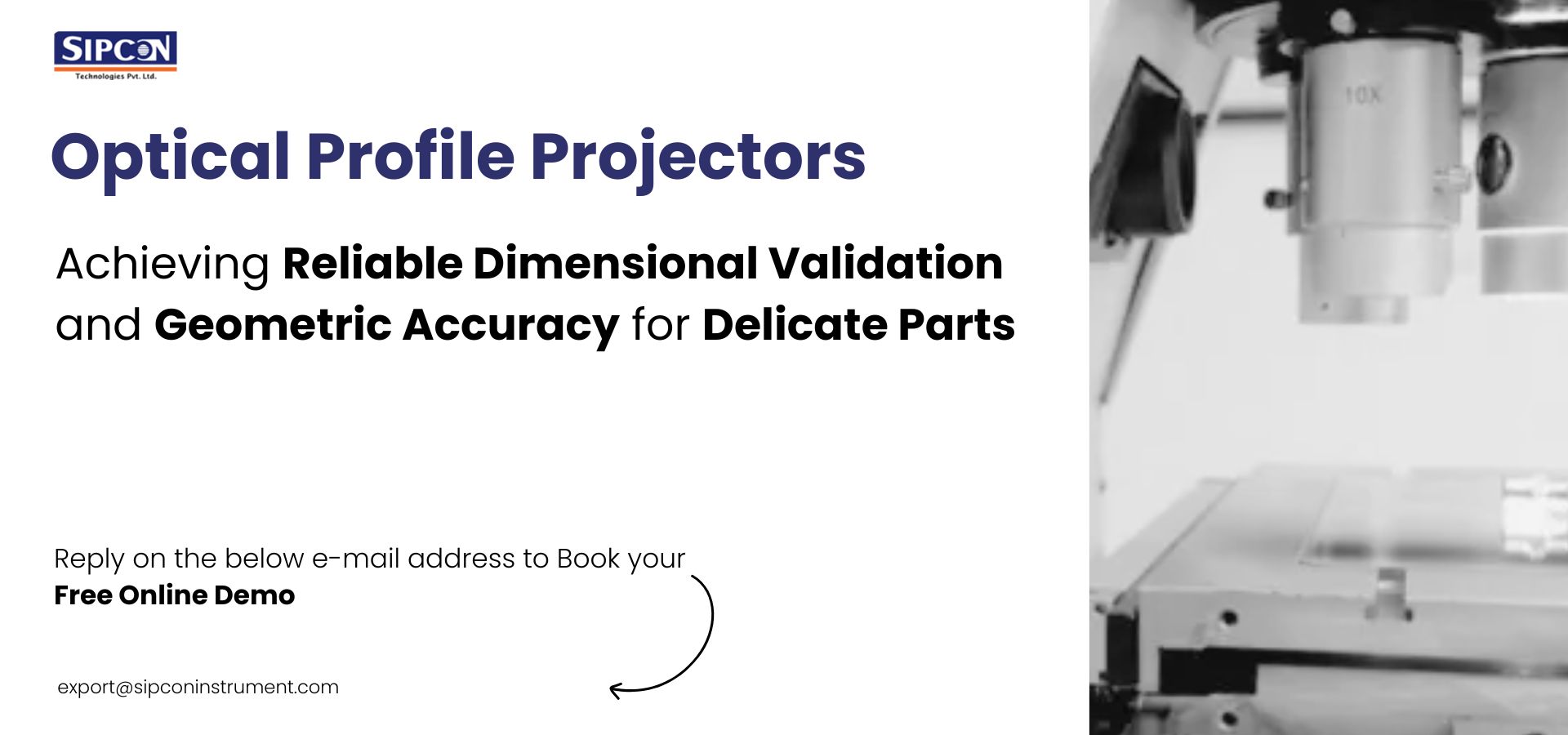
Optical Projector in Italy: Key Features, Uses, and Advantages
Manufacturing facilities require accurate instruments to ensure their products meet strict engineering tolerances. When parts are too small or delicate to measure with standard hand tools, factories turn to specialized visualization equipment. An optical projector solves this problem by taking tiny components and enlarging their physical silhouettes on a broad viewing screen.
Operators can easily compare these magnified shadows against standard design templates to verify accuracy. This technology remains highly relevant across Italian manufacturing sectors, providing a reliable method for rigorous quality control without risking damage to the physical products.
Optical Projectors for Precision Dimensional Measurement and Geometric Verification
Modern engineering demands absolute precision so that complex mechanical assemblies fit together perfectly. Production teams depend on accurate measurement devices to uphold these strict manufacturing standards. The optical projector serves as an essential device in this verification process. It offers a dependable method to inspect small, intricate items by projecting their magnified outlines onto a clearly visible monitor.
Guaranteeing Geometric Accuracy
Engineers evaluate this projected shape against original computer-aided design drawings. If the physical shadow aligns identically with the transparent template on the screen, the component passes the quality check. Any deviation immediately alerts the operator to a manufacturing error.
Optical Profile Projector Working Principle for Non-Contact Inspection Applications
Grasping the basic mechanics of the equipment allows technicians to operate it with greater efficiency. The fundamental optical projector working principle relies on basic physics regarding light refraction and optical magnification. You can trace the entire pathway of the light beam by examining a standard optical projector diagram found in the equipment’s technical manual. Such schematics illustrate the primary light source, the secure holding stage, the array of magnifying lenses, and the final display screen.
The Pathway of Light
A powerful halogen or LED bulb emits a steady, parallel beam of light. This beam travels in a straight line across the specific object resting firmly on the work stage. Because the light rays are parallel, the resulting shadow features incredibly sharp, well-defined edges.
Image Magnification Process
Precision optical lenses capture the dark shadow and expand its size according to a set ratio, such as 10x or 50x. Internal mirrors then reflect this newly enlarged image onto the back of a frosted glass monitor. The operator views the final result from the front of the machine.
Magnification, Illumination and Projection Systems in Optical Measurement Technology
The overall clarity of the final displayed image depends entirely on the quality of the internal optical components. Different testing scenarios demand specific lighting arrangements to properly highlight surface textures or exterior boundaries. Engineers configure these systems daily to match the exact requirements of the parts under inspection. Ensuring optimal lighting prevents measurement errors and reduces eye strain for the technicians.
Profile Illumination Configurations
Profile lighting represents the most common setup used in these machines. The light shines from beneath the part, pointing directly at the lens. This creates a high-contrast black shape against a bright white background, which is perfect for measuring outer dimensions.
Surface Illumination Configurations
Some components require operators to inspect blind holes or surface finishes. Surface lighting shines down onto the top of the part, illuminating its physical texture. The lens then captures the reflected light, displaying the surface details rather than a simple shadow.
Critical Performance Parameters of Industrial Optical Profile Projectors
An evaluation of several machine types calls for an in-depth analysis of the technical specifications of each machine. This is because these specifications determine the efficiency of operation on the manufacturing floor. Consumers need to be careful when analyzing these specs to be sure that the machine is suited for their specific purpose.
| Parameter | Technical Description | Industrial Importance |
| Screen Diameter | The physical width of the viewing monitor, usually measured in millimeters. | Determines the maximum size of the part that can be viewed at one time. |
| Stage Travel | The maximum distance the glass holding plate can move along the X and Y axes. | Allows operators to measure objects larger than the screen by moving the part. |
| Lens Accuracy | The maximum permissible error in the magnification optics. | Ensures the projected shadow perfectly represents the actual physical object. |
| Readout Resolution | The smallest measurement value the digital display can show. | Critical for industries requiring micro-millimeter precision. |
Optical Projectors for Profile Analysis, Edge Detection and Dimensional Validation
Identifying microscopic flaws on machined tools requires high-resolution visual feedback. One of the primary optical projector uses involves checking the sharp cutting edges of industrial blades to guarantee they meet strict engineering tolerances. Workers actively compare the physical edge geometry against a standardized transparent overlay affixed to the monitor. This visual comparison quickly reveals any chips, wear, or incorrect angles on the tool.
Inspection of Rubber Components, Plastic Parts and Complex Contours Using Optical Projection
Testing soft or flexible materials presents significant challenges during routine quality control. Traditional metal calipers or micrometers can easily compress soft items during testing, causing completely inaccurate readings. Utilizing light beams for measurement eliminates all physical pressure on the item. This non-contact approach proves invaluable for inspecting easily deformable materials.
Optical Projectors in Metrology Laboratories and Production Quality Control
The quality assurance team conducts tests within a highly stable environment. The use of the optical projector within the metrology process ensures that all the test data from the factory is linked to international standards. In most scenarios, the optical projector is housed in rooms to avoid metal expansion that may compromise the measurements.
Optical Projector Price in Italy: Specifications, Accuracy and Cost Considerations
Budgeting for new capital equipment demands a clear understanding of the current industrial market. The final optical projector Price fluctuates based on the monitor size, the inclusion of digital measurement readouts, and automated stage movements. Italian manufacturing facilities can find a wide variety of equipment tiers to match their specific budgets. Basic manual models cost significantly less, while fully automated computerized systems represent a major financial investment.
Industrial Optical Projector Suppliers in Italy: Technical and Service Considerations
Partnering with the correct equipment vendor holds as much importance as selecting the machine itself. A dependable optical projector supplier in italy will offer comprehensive installation, precise calibration, and ongoing maintenance programs. Purchasing managers must carefully evaluate the local technical support network before signing any contracts. Fast access to spare parts and knowledgeable repair technicians prevents long periods of expensive factory downtime.
SIPCON Optical Profile Projectors for Advanced Metrology and Precision Inspection
There exist brands that have created a good reputation for themselves in the field of measurement in Europe. Such brands include SIPCON, which has made an impression through its ability to create instruments with robust mechanical structure but advanced digital interface. Factories actively searching for a durable optical profile projector frequently review their available product lines. Their systems provide clear imaging and simple controls, making them a popular choice for busy inspection rooms.
FAQs
Q1) What is the main function of this equipment?
Ans: It enlarges the shadow of a small physical part onto a screen so an operator can measure its dimensions accurately.
Q2) Why use light instead of hand tools?
Ans: Using light prevents physical contact. This is vital when measuring soft rubber or plastic items that might bend or compress if squeezed by metal calipers.
Q3) Can it measure the surface of an object?
Ans: Yes. By using surface illumination, the light bounces off the top of the object, allowing the operator to view surface textures and blind holes.
Q4) How often does the machine need calibration?
Ans: Most metrology standards require industrial measurement equipment to undergo professional calibration annually to maintain accuracy.
Contact SIPCON for High-Precision Optical Projectors in Italy
Looking for reliable optical projectors for accurate dimensional inspection and quality control? SIPCON offers advanced optical profile projectors backed by expert support and precision engineering. Contact our team today to find the ideal solution for your inspection requirements.

Phone: +39 340 404 2357
Mail: eu@sipconinstrument.com
Enhance your measurement accuracy with SIPCON’s advanced optical projection technology for modern manufacturing and metrology applications.