
Applications of Optical Profile Projector in Manufacturing & Quality Control
Manufacturers rely heavily on visual accuracy to ensure parts are made perfectly every time. When you clearly see a microscopic problem, you can fix it before it becomes a massive issue. By turning invisible details into measurable data, workers catch dangerous errors before they ruin a final product. This is exactly where the Optical Profile Projector comes in as a critical inspection tool. It takes something incredibly small and blows it up significantly so human eyes can check it for hidden flaws.
How an Optical Profile Projector Works: Simple Working Principle Explained
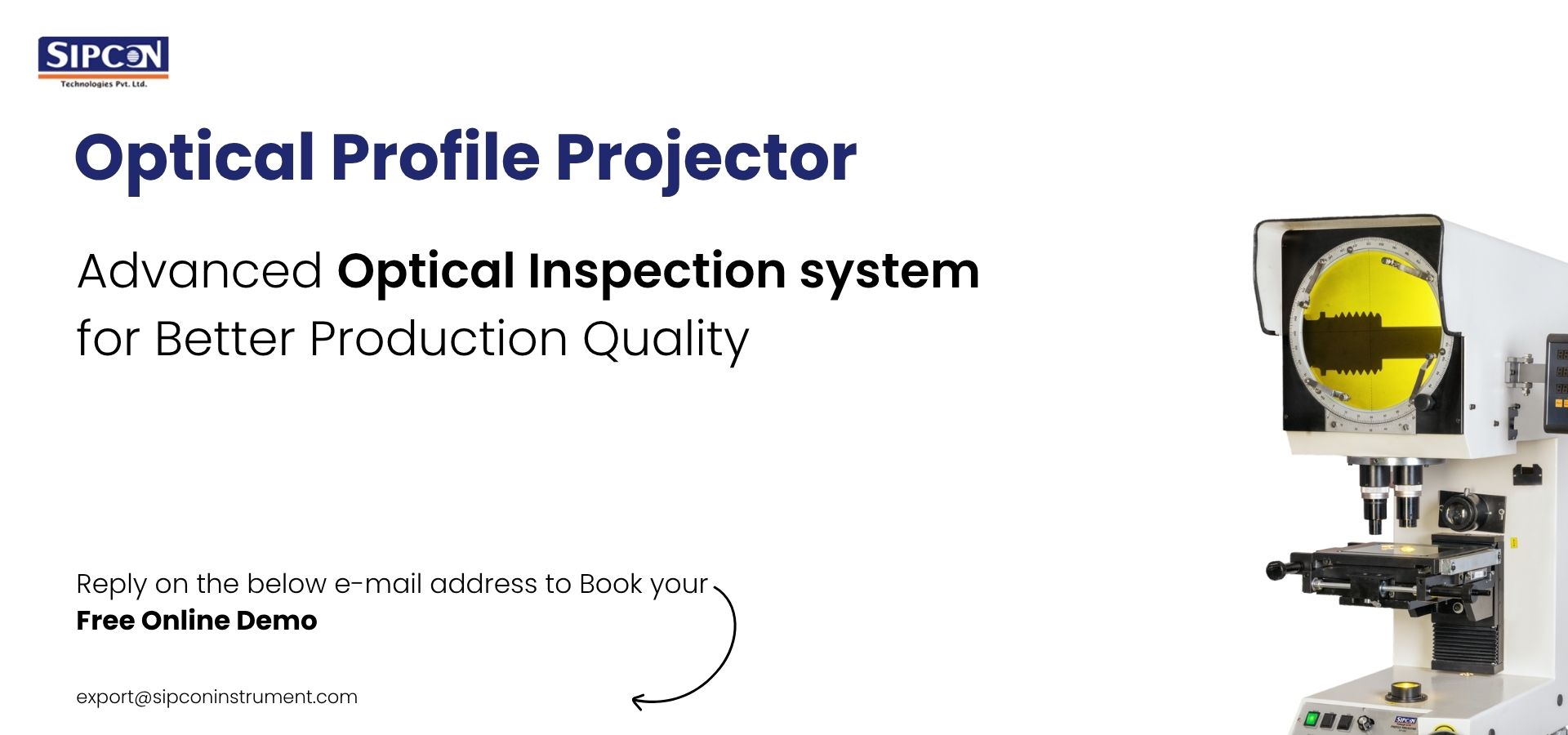
The way this machine functions is quite simple to understand without needing an engineering degree. The optical profile projector working principle relies on shining a bright light behind an object to create a sharp, dark shadow. That shadow passes through magnifying lenses and lands securely on a large glass screen. By looking at the edges of this dark shadow, workers can measure the exact shape of the part. If you look at an optical projector diagram, you will see how the light source, lenses, and screen line up perfectly to display accurate measurement scales.
Mapping Real-World Applications Across Manufacturing Environments
These machines are incredibly versatile and handle many different jobs across the factory floor. Let us look at some common uses of optical projectors in real manufacturing settings.
Tool & Die Inspection: Verifying Edge Geometry and Angles: Tool makers use these glowing screens to check the sharp edges and specific angles of metal cutting tools. Ensuring the geometry is perfectly correct means the tools will cut metal cleanly and last much longer.
Automotive Components: Ensuring Dimensional Accuracy at Scale: Car parts are produced by the millions, and they must all fit together smoothly to keep vehicles safe. Projectors help factories maintain exact dimensions for critical things like transmission gears and engine screws.
Aerospace Parts: Maintaining Tight Tolerances: Airplanes require the highest level of mechanical safety possible. Inspectors use these optical devices to verify that critical flight components meet very tight tolerances before they ever leave the ground.
Electronics & Micro Components: Inspecting Tiny Features: Modern electronics feature incredibly small wires and microscopic connectors. The projector makes these tiny features highly visible so factory workers can easily verify they are placed correctly on the circuit board.
Plastic & Rubber Parts: Non-Contact Precision Measurement: Soft materials like rubber and plastic can easily bend or warp if you touch them with hard measuring tools. Projectors offer a safe, non-contact way to measure these items without squishing them.
Why Optical Profile Projectors Still Matter in the Age of Digital Measurement
Even with newer computerized measuring machines available today, these classic projectors remain popular for several great reasons.
- They offer unmatched reliability and absolute simplicity for everyday factory workers.
- They provide highly cost-effective precision for factories operating on tighter budgets.
- They are absolutely ideal for specific inspection tasks like checking simple flat profiles.
- They play a fantastic complementary role alongside more advanced digital testing systems.
From 2D Profiles to Actionable Insights: How Operators Use Projected Data
Seeing the shadow on the screen is only the first step of the testing process. Operators must read precise measurements straight from the projected images on the glass. They often place a clear plastic template over the screen to compare the shadow directly with official company standards. This visual process makes identifying product defects and slight size deviations incredibly easy for the person running the test.
Selecting the Right Optical Profile Projector for Your Application
There are several aspects that you should pay close attention to when choosing an appropriate machine for yourself. Firstly, the issue of magnification is very important since it determines how clearly you will be able to observe certain parts. Secondly, it is crucial to take into account the image and screen sizes in order to avoid eye strain of your workers. Finally, the matter of precision of measuring and ease of control is essential.
Evaluating Optical Profile Projector Manufacturers: What Engineers Actually Consider
Engineers look past fancy sales brochures when they choose heavy testing equipment. They care deeply about crystal clear optical quality and the physical build durability of the machine. They also look closely at how well the software handles digital integration with other factory computers. Finding reliable optical profile projector manufacturers guarantees you will get great service and helpful support long after the purchase is complete.
Why Sipcon Instrument Is a Reliable Choice for Optical Profile Projectors
Sipcon Instrument has years of deep expertise in building high-precision systems for busy factories. They offer advanced solutions that align perfectly with real manufacturing applications across the globe. Because they have a strong understanding of the optical profile projector working principle, they build durable machines that deliver consistent accuracy day after day. Sipcon is fully trusted by many industries for their dependable inspection performance. Manufacturers seeking accurate and reliable optical inspection solutions choose Sipcon Instrument.
Limitations You Should Know Before Using an Optical Profile Projector
While these visual tools are absolutely fantastic, they do have a few small drawbacks you should keep in mind.
- They are not ideal for checking highly complex 3D shapes and deep curves.
- Manual systems depend heavily on the personal skill and eyesight of the operator.
- They require decent floor space and careful setup considerations to block out heavy room lighting.
The Evolving Role of Optical Projection in Modern Quality Control
These classic machines are certainly not getting left behind as factory technology advances. Today, we see deep integration with digital systems to automatically record test data into computers. Factories are actively building hybrid inspection setups that combine traditional glass screens with advanced digital cameras. This ensures their continued relevance in heavily precision-driven industries for many years to come.
The Power of Seeing Before Measuring
There is a massive advantage to visually confirming a part is correct before you start calculating the final numbers. Clear visual clarity leads directly to much better measurement accuracy overall. Choosing the correct inspection method protects your factory from sending out bad products to paying customers.
|
Feature Considered |
Importance for Production | Impact on Factory Floor |
|
Magnification Power |
Shows tiny hidden defects clearly | Prevents faulty parts from shipping |
|
Screen Image Clarity |
Reduces eye strain for workers |
Speeds up the daily inspection process |
| Non-Contact Checking | Keeps soft parts totally safe |
Eliminates accidental material damage |
| Simple Operation | Requires much less training time |
Lowers overall factory hiring costs |
Use optical profile projectors to achieve consistent and reliable quality control in your factory today.
If you’re using an optical profile projector or planning to add one to your quality control process, choosing the right system makes a big difference. Whether it’s for accurate measurement or detailed inspection, we can help you find the right solution for your setup.
Have a question or need a quick quote? Just reach out—we’re happy to assist.
📞Phone: +61 426 368 868
📧Mail: aunz@sipconinstrument.com
Let’s make your inspection process simpler and more reliable.