
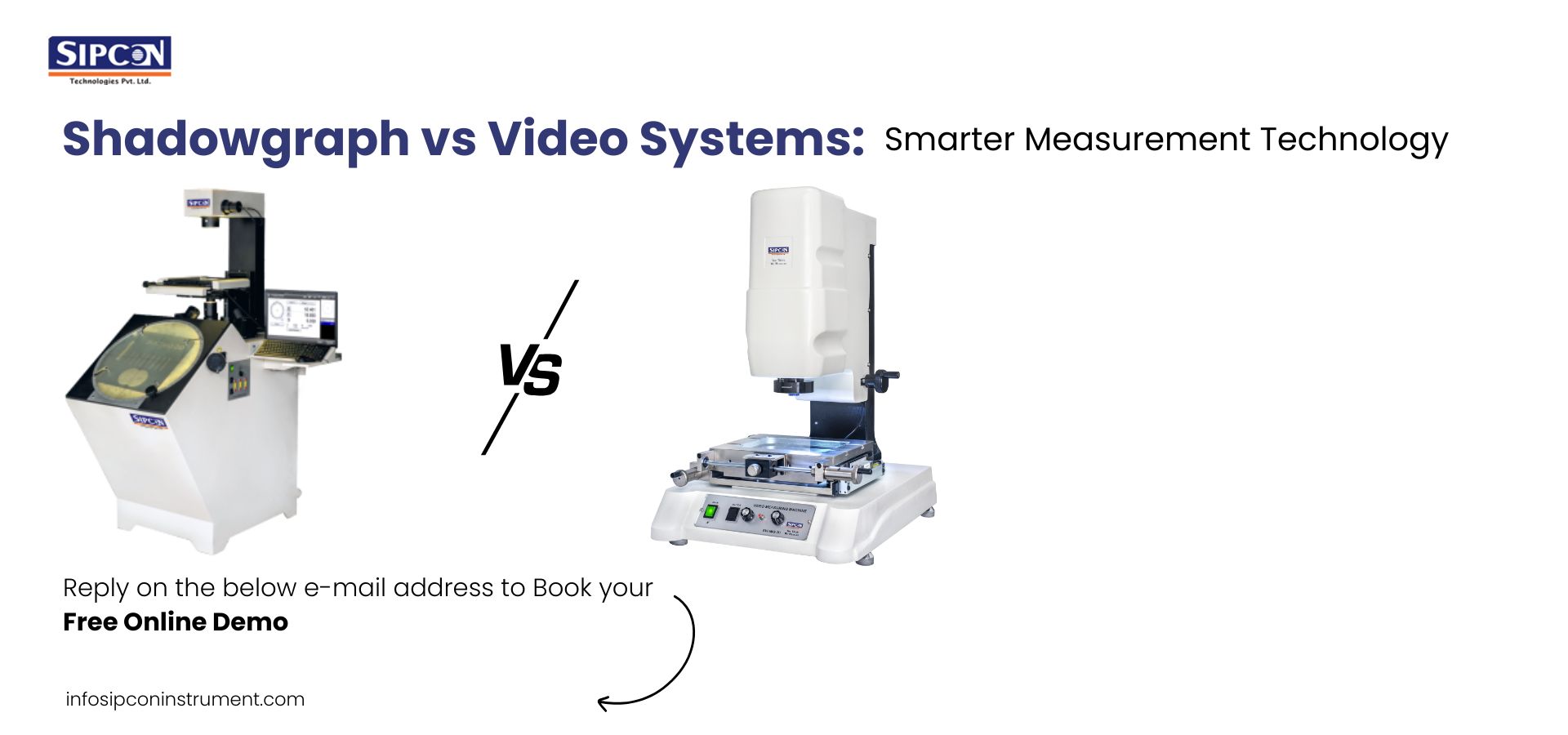
Shadowgraph vs Video Systems: A Modern Take on Part Measurement
Shadowgraphs and video systems may look similar in brochures.
In real production conditions, they are not even close.
How a Shadowgraph Actually Works on the Floor?
Shadowgraphs have existed for quite a while. Many manufacturers use them as a common tool because the majority of inspectors have become accustomed to using them. To utilize a shadowgraph, you simply activate the light source, set down the part you wish to inspect, and then look at the resulting image displayed on the screen.
For simple parts, this works well.
If the profile is clean and flat, the shadow tells you most of what you need to know. Checking radii, angles, threads, or outlines is straightforward. No software. No waiting. Just compare and move on.
That’s why shadowgraphs are still common in:
- Sheet metal parts
- Stamped components
- Plastic profiles
- Gaskets and washers
- First-article checks
They are tough machines. They don’t complain about power issues or dusty environments.
Where Shadowgraphs Start Slowing Things Down?
Problems don’t show up immediately. They appear when:
- Part volume increase
- More dimensions need checking
- Multiple operators inspect the same part
- Documentation becomes important
Manual positioning takes time. Reading overlays depends on the operator’s eye. Writing results by hand slows everything further.
Over a long shift, even good inspectors get tired. Readings start to vary slightly. Nothing dramatic, but enough to create doubt.
When people start asking, “Is there an easier way?”
What Video Systems Change?
Video measuring systems work differently. No shadows. No overlays.
A camera captures the part. Lighting highlights the edges. Software detects features. The stage moves automatically. Once a program is created, inspection becomes repeatable.
Load the part, run the program, and get the result.
Same steps. Same sequence. Same output.
There’s very little interpretation involved. That’s the main difference. Speed and Repeatability in Real Life. With shadowgraphs, speed depends on the operator. With video systems, speed depends on the program.
A single cycle can measure:
- Holes
- Radii
- Angles
- Profiles
- distances between features
- All in one run.
Because movement and measurement results stay consistent even when inspection is fast. This helps inspection keep up with production instead of becoming a bottleneck.
Operator Dependency Decreases-
Good inspectors are valuable. But they are also human. Two skilled people can read the same profile slightly differently, especially under pressure. That leads to discussions between quality and production.
Video systems reduce this dependency.
Once the program is approved, results don’t change with shifts or operators. This alone is a big reason why many shops invest in video systems.
Delicate Parts Are Easier to Handle
Some parts don’t like contact with thin plastics. Soft rubber. Light sheet metal. Touching these with tools can deform them. Video systems avoid that completely. Measurement happens without touching the part. For industries where even small damage is unacceptable, this makes a big difference. Reports Are Automatic, Not Extra Work. With shadowgraphs, reports usually mean manual notes or photos. With video systems, reports come automatically. Dimensions. Tolerances. Images. Pass/fail status. Everything is stored digitally. This helps during audits and customer reviews. It also helps track trends instead of reacting after something goes wrong.
Where Does the Decision Really Come From?
Most shops don’t choose after reading specifications. They choose after seeing where delays, doubts, or rechecks start creeping into daily inspection.
Shadowgraphs help when:
- Parts are simple
- Volumes are low
- Budgets are tight
- Quick visual checks are enough
Video systems help when:
- The volume is high
- Parts are complex
- consistency matters
- Documentation is required
- Many shops use both. Each tool has its place.
This isn’t about comparing old and new technologies. It is about using the best tool available to accomplish your task. Shadowgraphs are reliable and proven.
Video systems bring speed, repeatability, and data. If inspection is starting to feel slow or stressful, it’s worth taking a closer look at how measurement is being done.
If your current inspection methods are limiting accuracy or consistency, connect with SIPCON for a free demo on your toughest part. The factory that measures better truly wins better.
Connect with us: