

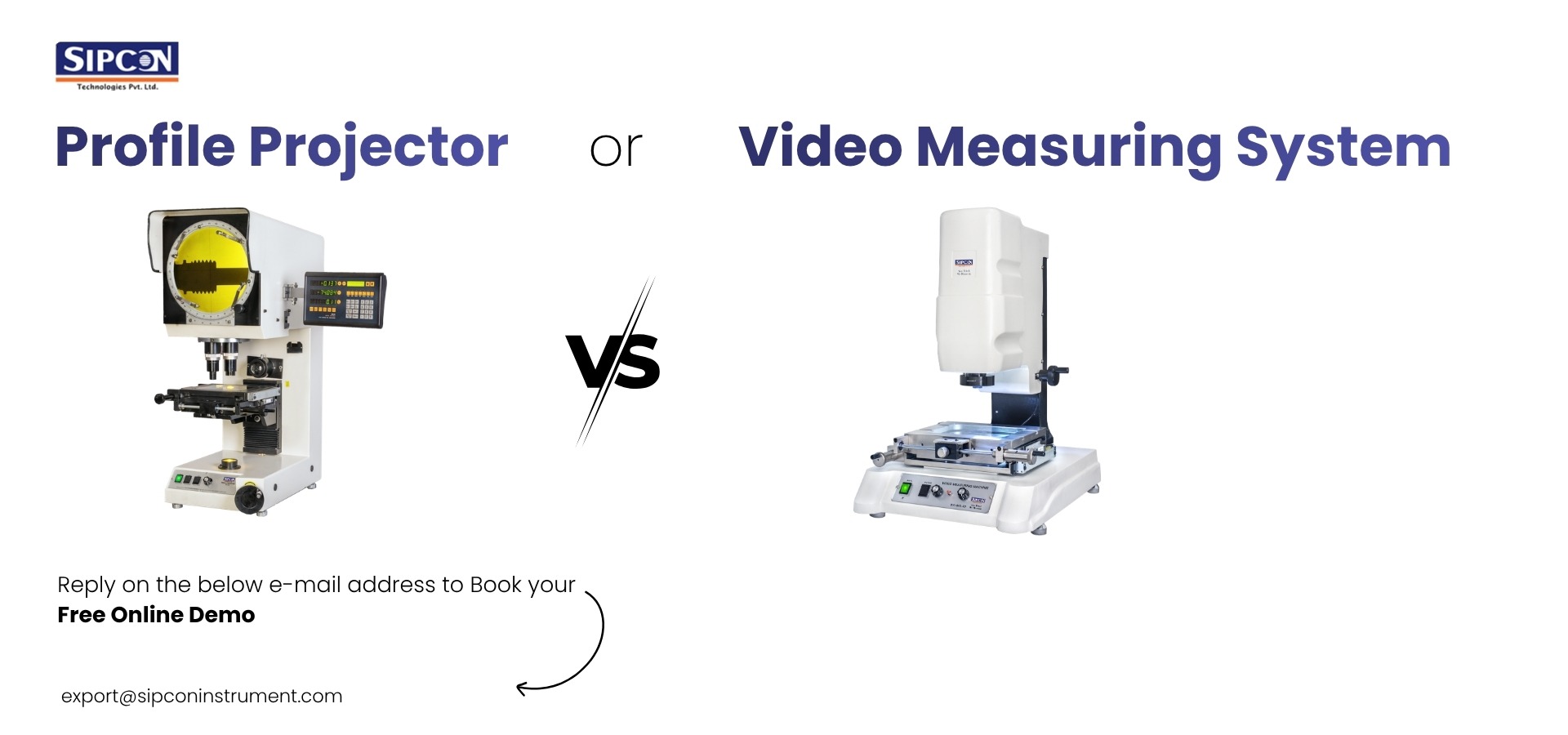
Profile Projector or Video Measuring System? Inspecting Rubber and Plastic Components in Automotive Supply
Rubber and plastic parts are hard to measure well. They bend, they compress, and they rarely sit under a probe. For automotive suppliers in Turkey, the choice often comes down to two tools: a profile projector or a video measuring machine for plastic parts. Here, we will see how each type of instrument helps us in the automotive industry.
Shadowgraph, Optical Comparator, Profile Projector: Same Machine, Three Names
Buyers often think these are three different tools. They are not. A shadowgraph, an optical comparator, and a profile projector all describe the same basic machine.
The idea is simple. The machine shines light past the part and casts an enlarged shadow onto a screen. An operator then measures that shadow against a scale or an overlay chart. The name changes by region and habit, but the method is one and the same.
Why Flexible Parts Break Conventional Measurement
Hard metal parts hold their shape. Rubber seals and soft plastics do not. This is the root problem.
A touch probe presses on the surface to take a reading. On a soft part, that small force is enough to change the shape:
- A rubber seal squashes at the contact point.
- A thin plastic lip bends away from the probe.
- A flexible gasket shifts before the point is even logged.
To measure these parts well, the method must be non-physical. That is why optical, non-contact tools suit rubber and plastic so well.
What a Profile Projector Does Well: Silhouette Measurement, Overlay Charts, Low Cost
A profile projector for rubber parts has clear strengths. It measures the silhouette of a part with no contact, so nothing deforms. It is a proven answer to how to measure rubber seals and other soft profiles.
Its main benefits are easy to state:
- Non-contact silhouette measurement that suits soft and flexible edges.
- Overlay charts that give a fast visual pass or fail against a drawing.
- Low cost per station, which makes it easy to place several on a shop floor.
For simple 2D checks at a fair price, the profile projector is hard to beat.
Where a Profile Projector Runs Out
The profile projector has limits, and they matter as parts and volumes grow.
It reads a silhouette, so it struggles with true 3D features and surfaces that face away from the light. It leans on the operator, who lines up edges and reads values by hand. That adds time and adds variation. It also lacks fast, automated reporting, so high part counts turn into slow, manual work.
When your parts get more complex, or your throughput climbs, these gaps start to cost real money.
Stepping Up to a Video Measuring System: When the Maths Works
A video measuring machine for plastic parts solves these gaps. A camera captures the part, and software finds the edges and measures them on its own. It handles more features, reports faster, and removes most operator judgment.
The profile projector vs video measuring system decision is really about volume and complexity. A video system costs more up front. But when you inspect many parts, or many features per part, the faster cycle and steadier results pay that cost back. If your line runs high mix or high count in Turkey, the maths usually favours the video system.
Horizontal vs Vertical: Choosing by Part Geometry
Profile projectors come in two layouts, and the part shape decides which one fits.
| Layout | Best for | Why |
| Horizontal profile projector | Long parts, shafts, extruded profiles | Part lies along the optical axis and is easy to support |
| Vertical profile projector | Flat, small, or stackable parts | Part sits on a stage for simple top-down viewing |
For long rubber extrusions and profiles, a horizontal profile projector is often the natural choice. For small flat seals, a vertical layout tends to be simpler to load and read.
ISO 3302-1 Tolerance Classes and What Your OEM Customer Will Audit
Rubber parts are toleranced under ISO 3302-1. This standard sets dimensional tolerance classes for moulded and extruded rubber, from tight classes to looser ones.
Your OEM customer in Turkey will audit against the class named on the drawing. They will check that your equipment can resolve the tolerance, that your method is repeatable, and that each result ties back to the part. Whichever tool you choose, it must measure to the ISO 3302-1 class your customer demands and produce records that survive that audit.
Cost Comparison Over 5 Years: Operator Time, Rework, Scrap
Purchase price is only part of the picture. The real cost shows up over years of use.
| Cost factor | Profile projector | Video measuring system |
| Purchase price | Lower | Higher |
| Operator time per part | Higher, manual reading | Lower, automated |
| Result variation | Higher, operator-led | Lower, software-led |
| Rework and scrap risk | Higher on borderline calls | Lower, consistent verdicts |
| Best fit | Low volume, simple 2D | High volume, complex parts |
Over five years, operator time, rework, and scrap often outweigh the price gap. A cheap station that is slow and variable can cost more than a video system that is fast and steady. Run the numbers on your own volume before you decide.
Explore the profile projector range, see the profile projector for rubber parts and the video measuring machine for rubber parts, or review our flash measurement system for moulded parts in Turkey.
Compare models → or book a demo with our team in Turkey.
Frequently Asked Questions
1 Q: Is a shadowgraph the same as a profile projector?
Ans: Yes. Shadowgraph, optical comparator, and profile projector are three names for the same machine. Each shines light past a part and measures the enlarged shadow on a screen. The name varies by region and habit, but a modern 2D profile projector is the tool all three terms describe.
2 Q: Should I use a profile projector or a video measuring system for rubber parts?
Ans: Use a profile projector for rubber parts for simple 2D checks at low volume and low cost. Choose a video measuring machine for plastic parts when you inspect many parts, need 3D features, or want automated reporting. The profile projector vs video measuring system choice comes down to volume and part complexity.
3 Q: How do you measure rubber seals without deforming them?
Ans: Rubber seals squash under a touch probe, so contact methods give false readings. Optical, non-contact tools solve this. A profile projector measures the seal’s silhouette with no contact, and a video measuring system reads its edges from a camera image, so the part keeps its true shape during measurement.