
Table Top Magnifiers & Carbon Black Dispersion Testing: An Australian Manufacturer’s QC Guide
Quality control in cable, polymer and electronics manufacturing depends heavily on what inspectors can see, and how consistently samples are prepared for inspection. For Australian manufacturers, choosing the right inspection equipment can help make routine QC more efficient while supporting testing procedures defined by applicable industry standards.
A table top magnifier provides convenient magnification for day-to-day visual inspection, while a Carbon black dispersion tester enables more specialised examination of polymer samples. For cable manufacturers, sample preparation equipment such as a cable slicer is another important part of the process.
This guide explains where table top magnifiers, dispersion microscopes, and cable preparation systems fit into an Australian manufacturing QC workflow.
Two QC Bottlenecks Australian Manufacturers Face
One common QC challenge is visibility. Fine workmanship defects, surface irregularities, contamination, and other small features can be difficult to assess with unaided vision. A magnification system allows inspectors to examine these details more closely at the workstation.
This is particularly relevant in electronics manufacturing. IPC-A-610 establishes acceptance requirements for electronic assemblies and addresses the use of magnification for visual inspection. Manufacturers should select magnification according to the applicable inspection criteria and current revision of the standard rather than assuming that greater magnification is always preferable.
Cable and polymer manufacturers face a different challenge: sample preparation. Microscopic analysis is only as useful as the specimen being examined. Poorly prepared cable or polymer sections can make dispersion, contamination, and other features more difficult to assess consistently.
A practical QC workflow therefore combines suitable sample preparation with the appropriate level of visual or microscopic inspection.
Table Top Magnifiers: Specs, Magnification Levels & Where They Fit on the Line
For routine inspection, Sipcon’s TTM (I) and TTM (III) Table Top Magnifiers provide two useful magnification options: 3.5X and 7X.
A magnifier table top configuration is particularly useful where operators need frequent access to enlarged visual inspection without moving components to a separate measurement station. It can be incorporated into production QC, incoming inspection, assembly inspection, and laboratory work.
The 3.5X option can support general inspection where a wider working view is desirable, while 7X provides greater enlargement for smaller features. The correct choice should ultimately reflect the component, defect size, and applicable inspection procedure.
Australian manufacturers can explore Sipcon’s table top magnifier range when selecting equipment for bench-based visual QC.
Carbon Black Dispersion Testing for AU Cable & Polymer Producers (AS/NZS 5000 + IEC 60811-4-1)
For cable and polymer producers, visual inspection may need to go beyond the surface. Carbon black dispersion is an important material-quality consideration because the distribution of carbon black within a polymer can influence material consistency and performance.
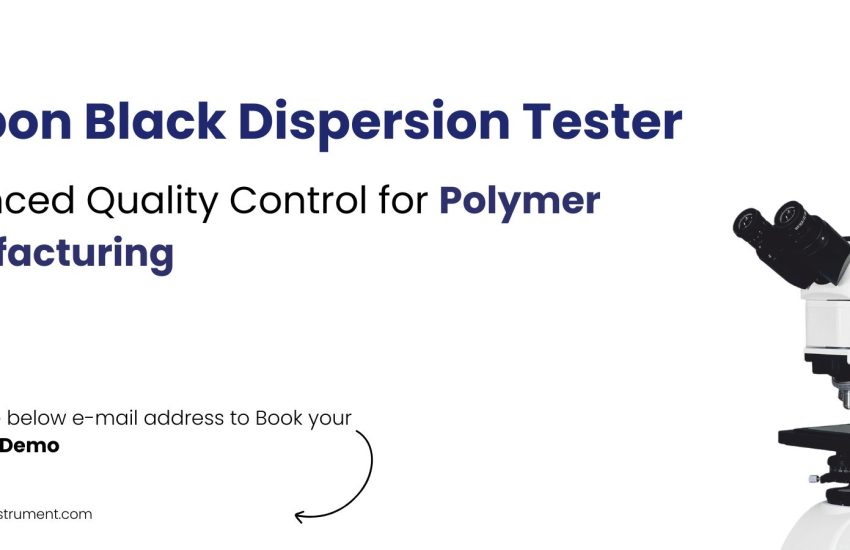
The CBD & Void Contamination Microscope provides a dedicated solution for examining prepared samples for dispersion and contamination-related characteristics.
For Australian cable manufacturers working with the AS/NZS 5000 cable series, it is important to follow the test methods and normative references applicable to the specific cable product and edition of the standard being used.
The brief’s specified IEC 60811-4-1 reference historically covered test methods for polyethylene and polypropylene compounds, including microscopic assessment associated with carbon black dispersion. Because standards are revised and replaced over time, Australian QC laboratories should verify the currently applicable IEC 60811 method referenced by their governing AS/NZS specification before claiming compliance.
ASTM D5596 provides a comparative microscopic approach for rating carbon black dispersion in polyolefin geosynthetics. It can therefore provide useful context when discussing comparative dispersion assessment, although manufacturers should apply the standard appropriate to their particular material and product.
For specialised equipment, manufacturers can review the CBD, and carbon black dispersion testing solutions on CableMeasurement.com.
Sample Prep Matters: Manual vs PLC Cable Slicers Compared
Microscopic analysis begins before a sample reaches the microscope. A consistent section is important because sample quality can affect how clearly material characteristics appear during inspection.
A Manual XLPE / Portable Benchtop Cable Slicer can be suitable when laboratories need straightforward, operator-controlled sample preparation. Manual equipment can make sense for lower testing volumes, development work or QC environments where operators prepare individual specimens as required.
PLC-controlled cable slicing systems are better suited to applications where manufacturers want greater automation and consistency across repeated preparation cycles. For higher-volume Australian cable laboratories, this can reduce dependence on repeated manual handling.
Slicer-Stripper-Slitter units provide another option where cable preparation involves multiple operations. Consolidating these functions can simplify the preparation workflow before microscopic examination.
Manufacturers can explore the relevant cable slicer and sample-preparation equipment on Cable Measurement.com when comparing manual, portable benchtop and automated solutions.
Table Top Magnifier or Full Vision Measuring System: Which Do You Need?
A table top magnifier is not intended to perform the same role as a full vision measuring system.
Choose a table top magnifier when the main requirement is enlarged visual inspection. It is practical for identifying visible workmanship issues, examining components, and supporting operator-led QC.
A vision measuring system becomes more appropriate when the inspection process requires dimensional measurement and more advanced measurement capabilities rather than visual enlargement alone.
Australian manufacturers considering this step can explore Sipcon’s vision measuring systems for Australia, and the AU article “Boost Accuracy with Video Measuring Systems in Australia” for further information.
The choice should therefore be based on the inspection objective: magnify when you need to see; measure when you need dimensional data.
Sipcon in Australia – Support, Calibration & Lead Times
Selecting QC equipment involves more than comparing magnification levels or instrument types. Australian manufacturers should also consider calibration requirements, application support, installation needs, training, servicing, and delivery planning.
These factors can vary according to the selected instrument, configuration and Australian destination. Rather than relying on generic estimates, manufacturers should confirm current calibration options, support arrangements, and lead times when requesting a quotation.
Whether the requirement is a TTM (I), TTM (III), Carbon Black Dispersion Tester, cable slicer or a more comprehensive vision measurement solution, matching the instrument to the actual QC process is the most important starting point.
Get an Australia-Based Quote through the AU contact form to discuss the appropriate configuration for your application.
FAQs
Q.1. What is a table top magnifier used for?
Ans. A table top magnifier provides enlarged visual inspection at a workstation. It can be used for manufacturing QC, assembly inspection, incoming inspection and examination of small components or surface features.
Q.2. What magnification options are available for the TTM models?
Ans.The products covered here include the TTM (I) and TTM (III) Table Top Magnifiers, offering 3.5X and 7X magnification options.
Q.3. What does a Carbon black dispersion tester do?
Ans.A Carbon black dispersion tester enables microscopic examination of prepared polymer samples to assess characteristics such as carbon black dispersion and contamination. The applicable test procedure depends on the material, product and governing standard.
Q.4. Why is a cable slicer important in dispersion testing?
Ans.A cable slicer prepares a section for microscopic examination. Consistent sample preparation helps inspectors obtain a clear specimen suitable for subsequent evaluation.
Q.5. Should Australian manufacturers use IEC 60811-4-1 for carbon black dispersion?
Ans.IEC 60811-4-1 is an important historical reference for the methods discussed in this area, but standards evolve. Australian manufacturers working to AS/NZS 5000 should verify the current edition of the relevant cable standard and its referenced IEC test methods before defining a compliance procedure.
Q.6. When is a vision measuring system better than a table top magnifier?
Ans.Use a table top magnifier when enlarged visual inspection is the main objective. Where QC requires dimensional measurement and more comprehensive measurement capabilities, a vision measuring system is generally the more appropriate solution.