Profile Projector Manufacturer – Optical, 2D & Vertical Profile Projector
A microscopic dimensional deviation might seem irrelevant, but a single hidden defect can initiate a massive line failure. When an out-of-tolerance part escapes standard inspection protocols, assembly lines jam and production costs surge. Preventing these massive discrepancies requires highly precise measurement tools. Profile projectors serve as the definitive non-contact measurement systems for complex profile analysis. By utilizing magnified optical shadows, they bypass the physical limitations of tactile tools. Modern manufacturing relies on optical, 2D, and vertical setups to verify geometries with unmatched data reliability.
Why Profile Projectors Remain the Industry Standard for High-Accuracy Non-Contact Measurement
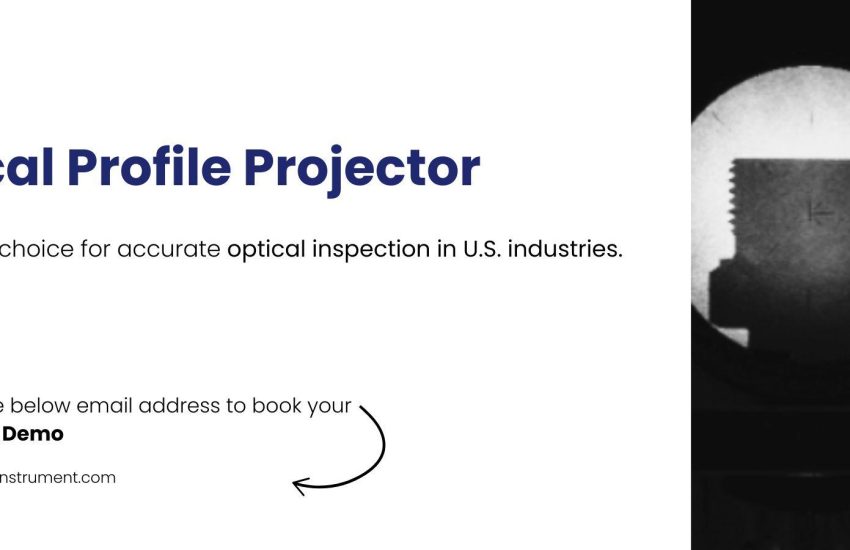
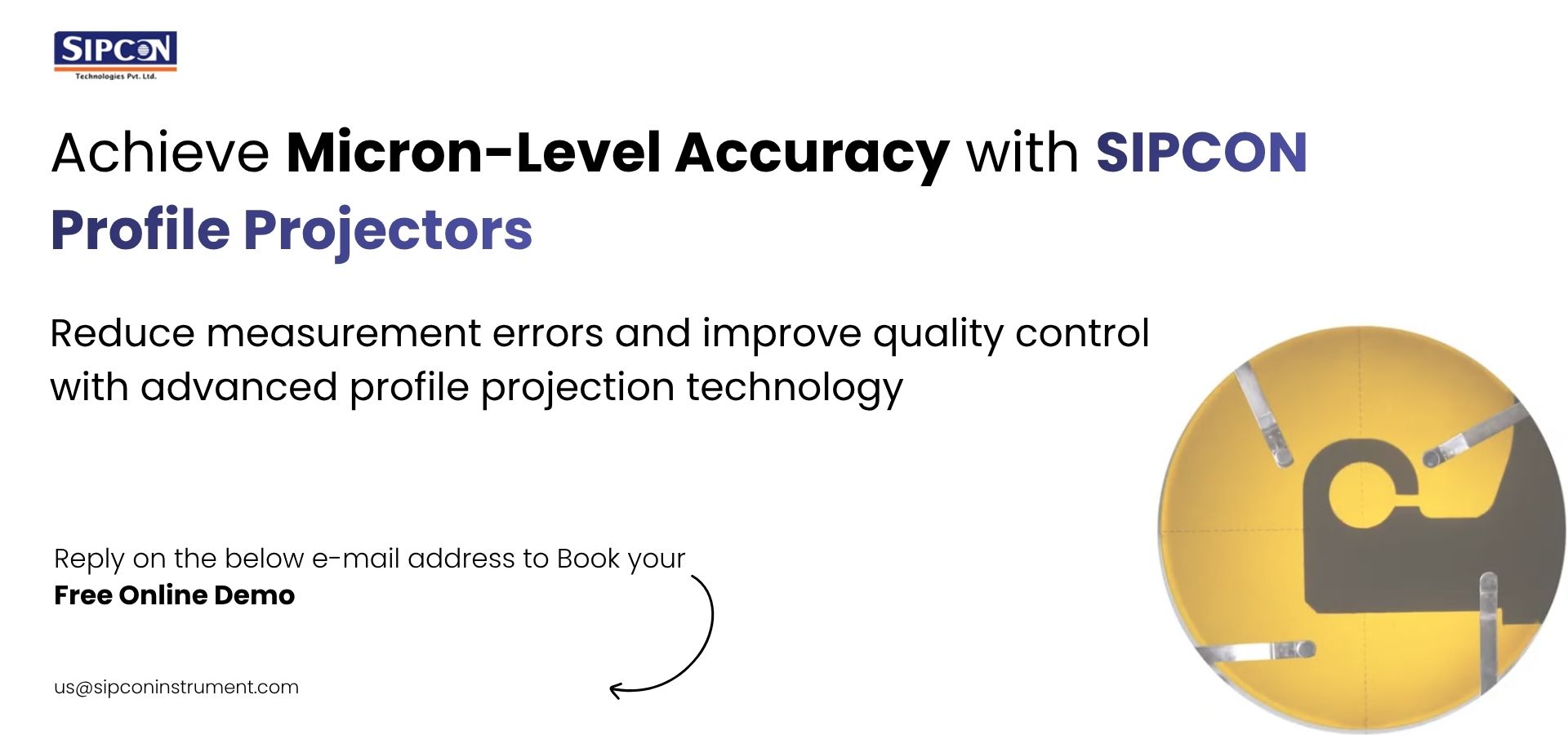
The demand for precision inspection grows exponentially every year. A profile projector operates as a specialized optical measuring instrument. It projects an intensely magnified, distortion-free silhouette of a physical component directly onto a frosted glass viewing screen. Operators then actively measure this shadow against a physical grid overlay or digital readout.
Heavy industries retain these machines primarily because manual inspection introduces massive human error. Steel calipers physically compress soft elastomers, yielding false data. Profile projection technology eliminates physical contact entirely, generating an objective, mathematically pure visual representation. Multiple engineers can verify the exact same data simultaneously on the screen, allowing for rapid pass/fail determinations in high-pressure environments.
Key Advantages of Profile Projectors
- Non-contact measurement prevents part deformation.
- High accuracy and repeatable results.
- Faster inspection cycles.
- Easy visual profile comparison against CAD templates.
- Drastic reduction in operator-induced errors.
Optical, 2D & Vertical Profile Projector: Selecting the Right System for Precision Inspection Applications
Different applications strictly demand different projector configurations to achieve true measurement accuracy. Partnering with a proven profile projector manufacturer helps match the correct mechanical architecture to your highly specific inspection workflow.
Optical Profile Projectors
An Optical Profile Projector relies on traditional, high-quality lens systems to magnify a shadow. These durable systems utilize bottom-up or top-down illumination paths. They serve perfectly in harsh shop-floor environments where operators quickly compare machined parts directly against transparent Mylar overlay templates.
2D Profile Projectors
A 2D Profile Projector merges digital processing power with heavy-duty optics to measure surface profiles along the X and Y axes. Featuring advanced digital readouts, they calculate complex intersecting radii and minute angles instantly. This computational speed makes them absolutely essential for inspecting stamped electronics and precision CNC-machined components.
Vertical Profile Projectors
Gravity heavily affects large or awkwardly shaped components. A Vertical Profile Projector solves this challenge by directing the optical light path vertically. This allows heavy flat steel parts or flexible engine gaskets to lie completely flat on a reinforced glass staging platform without suffering severe warping.
Factors Influencing System Selection
- Component size and physical weight.
- Overall shape complexity.
- Microscopic accuracy requirements.
- Daily production volume.
Measuring Rubber Parts, Seals and Complex Profiles with Advanced Profile Projection Technology
Components manufactured from soft elastomers can present significant inspection challenges. When a conventional contact measuring instrument is used on a rubber engine seal, the material may compress, leading to inaccurate dimensional readings.
Advanced profile projection technology helps eliminate this concern through non-contact optical measurement. By capturing the component’s profile without physical contact, quality control engineers can accurately evaluate the resting dimensions of highly flexible parts. Inspecting rubber seals often requires verification of both inner and outer diameters without distorting the material. Additionally, the projector’s magnified image helps detect minor flash, surface imperfections, and mold misalignment in extruded plastic components, enabling engineers to identify manufacturing issues and make necessary process adjustments.
Common Components Measured Using Profile Projectors
- Rubber engine seals
- Highly flexible industrial gaskets
- Extruded plastic components
- Precision molded products
Key Performance and Accuracy Factors to Evaluate Before Choosing a Profile Projector Manufacturer
Actual machine performance relies on significantly more than baseline specifications. Industrial buyers must aggressively scrutinize the underlying engineering quality before making a capital investment.
Measurement Accuracy & Optics
True volumetric accuracy relies on the linear precision of the heavy mechanical stage. Additionally, high-quality telecentric lenses dictate the clarity of the projected shadow, entirely preventing edge distortion at the screen’s extreme outer limits.
Illumination & Software Features
Surface illumination systems must provide intensely bright, uniform light without generating excessive thermal heat that could warp delicate plastics. Modern high-speed inspection also requires integrated geometric software that efficiently calculates complex radii and seamlessly exports raw data directly to your factory’s quality management software.
Calibration and Service Support
Optical instruments require regular mechanical maintenance. A manufacturer’s ability to provide traceable calibration certificates and rapid field service proves critical. Waiting weeks for a technician guarantees costly production downtime.
SIPCON Profile Projectors: Precision Measurement Solutions for Modern Quality Control Environments
Modern manufacturing facilities require incredibly robust, highly adaptable inspection tools. Sipcon profile projectors provide comprehensive measurement solutions engineered specifically to survive demanding industrial conditions.
Available in multiple heavy-duty configurations, these systems focus heavily on rapid, highly accurate dimensional verification. Intuitive software interfaces allow both seasoned metrologists and newly hired floor-level operators to capture precise data with minimal training. This distinct focus on physical ergonomics directly increases overall inspection efficiency. Automotive, aerospace, and medical device sectors utilize these solutions to identify critical manufacturing defects early in the production cycle, significantly reducing wasted raw material.
Profile Projector Machine Price Guide: Understanding the Cost Drivers Behind Industrial Measurement Systems
Allocating capital for metrology equipment requires understanding the underlying technology. A Profile Projector Machine Price fluctuates based entirely on your specific technical tolerances.
The raw physical architecture—such as heavy cast-iron materials for large floor models—pushes manufacturing costs upward. Massive stage travel ranges require highly precise linear encoders. High-end telecentric lenses, larger projection screens, and advanced geometric measurement software add significant value. Furthermore, fully automated CNC programming capabilities transform a manual projector into a high-speed inspection center. Industrial buyers must carefully evaluate the return on investment over the machine’s lifespan rather than focusing solely on the initial purchase cost.
Conclusion
Profile projectors remain indispensable within modern manufacturing environments. Utilizing non-contact optical technology allows these heavy-duty systems to completely eliminate the severe risk of material deformation and operator-induced measuring errors. By selecting the appropriate optical, 2D, or vertical architecture, manufacturers efficiently tackle highly diverse inspection challenges. Partnering with an experienced manufacturer like SIPCON provides industrial facilities with the robust measurement solutions, distortion-free optics, and essential field service support required to maintain the absolute highest standards of global precision manufacturing.
FAQs
Q1) What is a profile projector used for?
Ans: A profile projector inspects and measures complex 2D profiles, sharp angles, intricate radii, and surface features of manufactured components using intensely magnified optical shadows.
Q2) How accurate is a profile projector?
Ans: Modern profile projectors are incredibly accurate. They typically measure down to a few microns depending heavily on the quality of the stage encoders, the lens telecentricity, and the software integration.
Q3) What is the difference between a profile projector and a vision measuring machine?
Ans: A profile projector projects a magnified optical shadow directly onto a glass screen for manual visual inspection and measurement. A vision measuring machine uses high-resolution digital cameras and software algorithms to automatically capture and measure digital images of the physical part.
Q4) Can profile projectors inspect rubber and plastic parts?
Ans: Yes. They utilize entirely non-contact optical measurement. This makes them the ideal tool for inspecting highly flexible rubber seals, soft plastics, and engine gaskets without physically deforming or crushing the material.
Q5) How do I select the right profile projector?
Ans: Selection strictly relies on the physical size of your manufactured components, their raw weight, the required micro-measurement accuracy, your daily production volume, and the overall geometric complexity of the profiles being inspected.
Q6) Which industries use profile projectors?
Ans: They see heavy daily use in automotive, aerospace, medical device manufacturing, advanced electronics, tool and die making, and the industrial rubber and plastics sectors.
Q7) What factors affect profile projector machine pricing?
Ans: Pricing fluctuates based on the raw machine configuration, the glass screen size, the mechanical stage travel range, optical lens quality, software capabilities, and the inclusion of motorized automated features.