
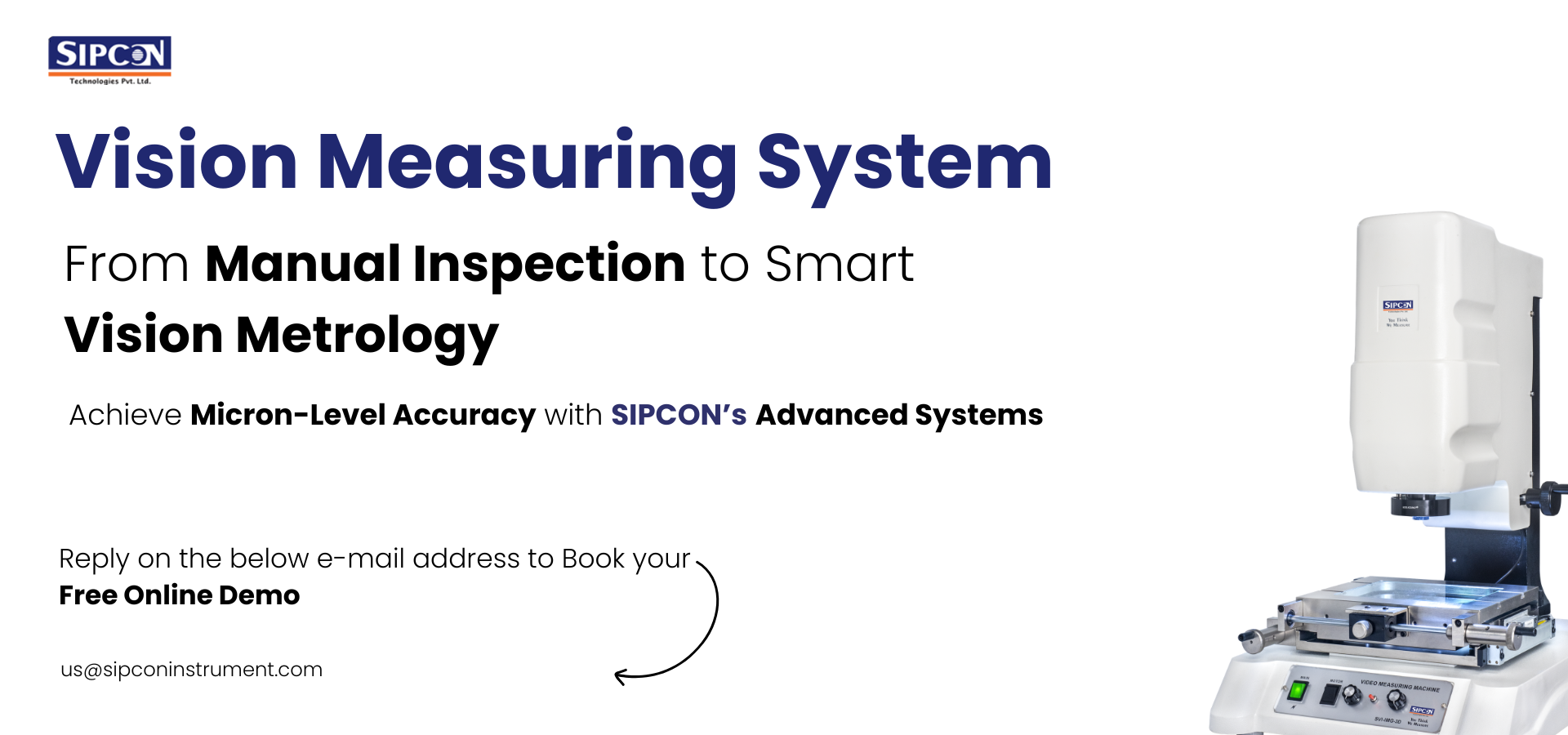
Vision Measurement System: Technology, Applications & Leading Manufacturers
Manufacturing today is not just about producing parts fast. It’s more about producing them accurately, consistently, and with almost zero defects. In industries like aerospace, automotive, medical devices, electronics, and precision engineering, even a very small measurement error can create major quality problems.
That’s why the vision measurement system has become such an important part of modern manufacturing. Companies are moving away from slow manual inspection methods and adopting smarter optical measurement technologies that can inspect parts quickly and with better accuracy.
A modern vision based measurement system helps manufacturers reduce inspection time, improve quality control, and automate measurement processes without touching the component physically. Over the last few years, demand for advanced systems has increased rapidly, especially among industries working with micron-level tolerances.
In this blog, we’ll explore how these systems work, where they are used, their advantages, pricing factors, and some of the leading vision measurement systems manufacturers in the market today.
Introduction to Vision Measurement System Technology
A vision measurement system is an optical inspection machine that uses cameras, lenses, lighting, sensors, and software to measure the dimensions of an object.
Instead of measuring parts manually using calipers or gauges, the machine captures high resolution images and analyzes them digitally. This makes the process much faster and more accurate.
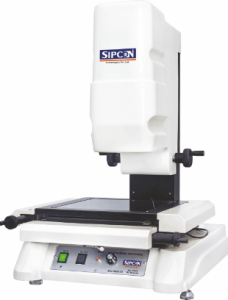
A typical vision system for measurement can inspect:-
- Length
- Diameter
- Angles
- Radius
- Hole positions
- Surface profiles
- Geometrical dimensions
Since the process is non-contact, it works really well for delicate or very small components that can be difficult to inspect manually.
Evolution of Industrial Measurement Technology
The evolution of industrial metrology can be categorized into four stages:-
- Manual Measurement Era- Traditional tools such as calipers, micrometers, and gauges relied heavily on operator skill and manual interpretation.
- Coordinate Metrology Era- Coordinate Measuring Machines (CMMs) introduced probe-based automated dimensional analysis.
- Optical Metrology Era- The introduction of the vision measurement system enabled high-speed non-contact measurement for delicate and miniature components.
- Smart Manufacturing Era- Today’s intelligent CNC measurement system integrates AI analytics, automation, robotics, and real-time data reporting into smart factory ecosystems.
This transformation is driving the rapid adoption of advanced vision-based inspection technologies.
Main Components of a Vision Measurement System
A modern vision measurement system combines different technologies together to achieve accurate inspection.
- Industrial Camera: The camera captures detailed images of the component. Higher resolution usually means better measurement precision.
- Lens System: Telecentric lenses are commonly used because they reduce distortion and improve edge accuracy.
- LED Illumination: Lighting is extremely important in optical inspection. Different lighting methods help improve contrast and feature visibility.
- Motion Control Stage: The movement platform positions the part accurately during inspection.
- Measurement Software: The software processes images, detects edges, calculates dimensions and generates reports.
- CNC Automation: An advanced CNC measurement system uses motorized automatic movement for high-speed automated inspection.
How a Vision Based Measurement System Works
The working principle is actually quite interesting.
First, the component is placed on the measuring stage. The camera captures images under controlled lighting conditions. Then the software analyzes those images and calculates dimensions based on edge detection and geometric analysis.
The whole process usually includes:-
- Image Capture: The system captures high-quality images of the part.
- Feature Detection: Software identifies edges, contours, and measurement points.
- Dimensional Analysis: The machine calculates dimensions automatically.
- Report Generation: Inspection data is saved digitally for quality records.
This entire workflow makes a vision system for measurement much faster compared to manual methods.
Types of Vision Measurement Systems
Not every industry uses the same kind of inspection setup. Different applications require different systems.
Manual Vision Measurement System
In manual systems, the operator controls positioning and measurement.
These are generally used for:
- Laboratories
- R&D work
- Low-volume inspection
CNC Measurement System
A CNC measurement system is fully automated and controlled through programmed inspection routines.
These systems are widely used in production environments because they can inspect multiple parts quickly with consistent accuracy.
Advantages of CNC Systems
- Faster inspection
- Less manual effort
- Better repeatability
- High productivity
- Automated batch inspection
For industries handling large production volumes, CNC systems save a lot of time.
2D Vision Measurement System
These systems measure flat or planar dimensions.
Common applications include:-
- PCB inspection
- Sheet metal parts
- Gaskets
- Plastic components
3D Vision Measurement System
3D systems can measure height, depth, and complex surfaces.
These are mostly used in:-
- Aerospace
- Mold inspection
- Tool manufacturing
- Complex engineering parts
Applications of Vision Measurement Systems
Today, almost every precision manufacturing industry uses some type of vision measurement system.
Automotive Industry
Automotive manufacturers use optical inspection for gears, shafts, engine components, EV battery parts, and machined components.
The speed and accuracy of a vision based measurement system helps maintain consistent production quality.
Aerospace Industry
Aircraft components require extremely tight tolerances.
Even a small dimensional variation can create safety issues. That’s why aerospace manufacturers rely heavily on automated optical metrology systems.
Electronics Industry
Electronics manufacturing involves very tiny components that are difficult to inspect manually.
A vision system for measurement is commonly used for:
- PCB inspection
- Connector analysis
- Semiconductor inspection
- Micro-component measurement
Since the process is non-contact, delicate electronic parts remain safe during inspection.
Medical Device Manufacturing
Medical industries also require very high precision standards.
Vision systems help inspect:
- Surgical tools
- Implants
- Catheters
- Precision medical components
Tool & Die Industry
Tool manufacturers use CNC measurement system solutions for:
- Mold validation
- Tool geometry inspection
- Wear analysis
- Precision machining verification
Advantages of Vision Measurement Systems
The reason why industries are investing more in optical metrology is simple — the benefits are significant.
- High Accuracy: Modern systems can achieve micron-level precision.
- Faster Inspection: Automated inspection saves a lot of production time.
- Non-Contact Measurement: Sensitive components can be measured safely without physical contact.
- Reduced Human Error: Software-driven measurements improve consistency.
- Digital Data Storage: Measurement reports can be stored and analyzed easily.
- Better Productivity: A CNC measurement system can inspect multiple parts continuously with minimal operator involvement.
Vision Measurement System Price: What Affects Cost?
The vision measurement system Price depends on many technical factors.
- Accuracy Requirements: Higher precision systems generally cost more.
- Measuring Range: Large measuring capacity increases machine size and pricing.
- Automation Features: A fully automated CNC measurement system costs more than a manual system.
- Software Capabilities: Advanced software with CAD comparison and AI analysis increases cost.
- Sensor Technology: Systems with laser or multi-sensor integration are usually more expensive.
- Brand & Support: Experienced vision measurement systems manufacturers often provide better service and long-term reliability.
When companies plan to Buy vision measurement system, they should look at long-term performance instead of only the initial price.
How to Choose the Right Vision Measurement System
Choosing the right system depends on production requirements.
- Understand Your Accuracy Needs: Different industries require different tolerance levels.
- Check Production Volume: For high-volume production, automated CNC systems work better.
- Evaluate Software Features: Good software improves inspection speed and reporting efficiency.
- Consider Future Expansion: The system should support future manufacturing growth.
- Choose Reliable Suppliers: Working with an experienced vision measurement systems supplier in USA is important for support, calibration, and maintenance.

Leading Vision Measurement Systems Manufacturers
The market for industrial metrology equipment has grown a lot in recent years. Many global companies now offer advanced optical inspection solutions.
Still, manufacturers usually prefer suppliers that provide:
- Reliable accuracy
- Good technical support
- Customization options
- Automation expertise
- Long-term service support
One company getting strong attention in this field is Sipcon Instrument.
As a growing vision measurement systems supplier in USA, Sipcon Instrument provides advanced optical inspection and automation solutions for modern industries. Their systems are designed for precision manufacturing environments where accuracy and repeatability are critical.
Many industries looking to Buy vision measurement system solutions now prefer suppliers like Sipcon Instrument because they offer both technology support and practical industrial experience.
Future of Vision-Based Measurement Technology
Inspection technology is evolving very fast.
Modern factories are now integrating:
- AI-based defect detection
- Robotic inspection systems
- Smart factory connectivity
- Cloud-based quality monitoring
- Automated SPC analysis
The role of the vision based measurement system will continue growing as industries move toward fully automated production environments.
In the coming years, advanced vision system for measurement technologies will become even more intelligent, faster, and easier to integrate with smart manufacturing systems.
FAQs
Q1) What is a vision measuring system?
Ans: A vision measuring system is an optical inspection machine that uses cameras, lighting and software to measure dimensions and inspect parts with high -precision.
Q2) What are the 7 types of measuring devices and equipment?
Ans: Common measuring devices include:
- Vernier Caliper
- Micrometer
- Height Gauge
- Dial Indicator
- Coordinate Measuring Machine (CMM)
- Vision Measuring Machine (VMM)
- Laser Measurement System
Q3) What is VMM and CMM?
Ans: VMM: A Vision Measuring Machine uses optical technology for non-contact dimensional inspection.
CMM: A Coordinate Measuring Machine uses touch probes to physically measure part geometry.
Both are widely used in industrial metrology, but VMM systems are generally faster for small and delicate components.
Why Vision Measurement Systems Are Becoming Essential for Modern Manufacturing
Modern manufacturing is changing fast, and vision measurement systems are becoming a key part of quality control. Companies today need better accuracy, faster inspection, and less manual work — and that’s exactly where these systems help.
From automotive and aerospace to electronics and medical industries, manufacturers are using advanced inspection technology to improve production and avoid quality problems. Whether it’s a simple optical setup or a fully automated CNC measurement system, the right equipment can save both time and cost in the long run.
As a trusted supplier in the USA, Sipcon Instrument supports manufacturers with modern inspection solutions designed for real industrial needs. For businesses planning to buy a vision measurement system, working with an experienced company can make the whole process easier and more reliable.